
At first, the drink appears as a slightly fizzy, tart tea, presented as an alternative to soft drinks. Sometimes you read the words « fermented beverage », you see a SCOBY in a jar of homemade kombucha, you understand that something alive is happening between the tea, the sugar and the culture. And then, sooner or later, the question arises:
« Since it ferments, does it contain alcohol? »
The short answer is simple: yes, kombucha contains alcohol, at least in trace amounts. The full answer is more nuanced. It all depends on how it’s prepared, how long it takes to ferment, and whether you’re talking about industrial or homemade this brew.
If you prepare your kombucha with a healthy SCOBY, such as a Natural Probio this culture culture, you are working with an ecosystem that produces alcohol, but is also capable of transforming it into acids. The final quantity depends on the balance between yeast and bacteria, and the choices you make in your kitchen.
In this article, we’re going to take the time to calmly answer all the questions surrounding alcohol in kombucha, so that you really know what you’re drinking and how to adjust your practice.
Kombucha is the result of fermentation. As soon as yeasts consume sugar, they produce two main things:
alcohol and carbon dioxide.
In a jar of homemade the drink, the sequence looks like this.
This process is the same as for bread or beer. In all cases, the sugar is transformed into alcohol and gas.
The difference with a purely alcoholic drink is that in it, the alcohol rarely remains at this stage. SCOBY isn’t just yeast. It also contains acetic bacteria that love alcohol and oxygen.
These bacteria :
We can therefore say that the alcohol in this brew is both :
This is why kombucha is not an « alcoholic beverage » in the traditional sense, even though it contains alcohol. The alcohol content is generally low, as a significant proportion is gradually transformed over the course of the days.
It would be reassuring to be able to say « this culture contains exactly X% alcohol ». In reality, things are more complex, especially for homemade kombucha.
The exact alcohol content depends on a number of parameters.
At the start of fermentation, the yeasts have a lot of sugar at their disposal. They therefore produce alcohol in significant quantities in relation to the volume. Bacteria, on the other hand, need time to transform this alcohol into acids.
If you look at the process over time :
The alcohol content is therefore not a constant. It rises and then falls, depending on how the yeast and bacteria succeed one another.
The warmer it is, the faster the micro-organisms work. A kitchen at 25°C will not produce the same alcohol profile as a room at 18°C, for the same fermentation time.
Once again, alcohol levels are the result of a dynamic balance, linked to your environment.
Not all the ferment cultures are created equal. A young but healthy SCOBY from a well-tended line, such as a Natural Probio culture, has a stable balance of yeast and bacteria.
If the strain is unbalanced, with too much yeast in relation to the bacteria, the kombucha can :
Conversely, a strain that is too weak may ferment slowly, leaving more residual sugar.
So the final alcohol content is not just a question of recipe, it’s also a question of the quality of the crop.
The more sugar there is to begin with, the more raw material there is to produce both alcohol and acids.
In practice, a standard amount of sugar is used for homemade the drink. If you start to take a lot of liberty by increasing the dose sharply, you can push the yeasts to produce more alcohol before the bacteria have time to process the surplus.
When we talk about alcohol levels, we need to distinguish between two worlds.
Producers of industrial this brew are subject to :
To keep their kombucha below a precise alcohol threshold, they :
Industrial this culture therefore has an alcohol content that is measured and controlled at the time of bottling, then remains relatively stable over time, especially if it is pasteurised.
Homemade kombucha, prepared with a live SCOBY, does not follow this industrial logic. It continues to ferment as long as it contains sugar and is at room temperature.
However, we do know a number of important things:
Homemade kombucha is therefore a drink where the alcohol is controlled indirectly, by controlling the time, temperature and quantity of sugar, and by working with a balanced culture such as SCOBY Natural Probio.
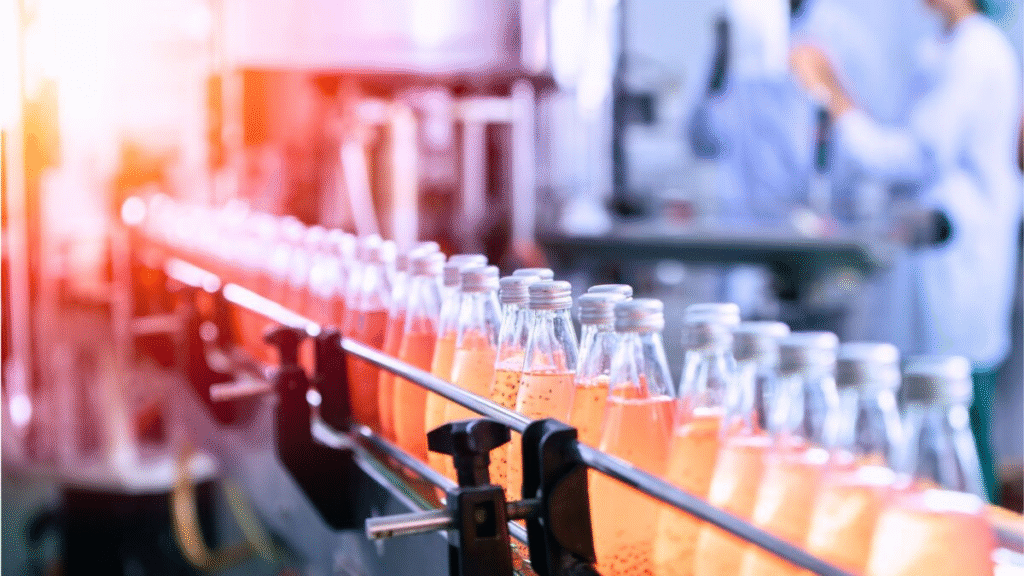
Most countries consider a drink to be officially ‘alcoholic’ above a certain threshold (e.g. around 1.2% or 1.5%, depending on the legislation). Below this threshold, drinks are considered non-alcoholic, or very low in alcohol content, rather like certain fermented juices or kefirs.
Industrial kombuchas intended for the general public are manufactured to remain below this threshold, and sometimes well below it, so that they can be sold as non-alcoholic drinks.
The situation is different for homemade kombucha: you don’t sell it, you don’t label it, you prepare it for your own consumption. So it’s important to keep one thing in mind:
You can’t turn homemade kombucha into a ‘zero alcohol’ drink in the strict sense. You can simply keep it in a low-alcohol zone, comparable to other everyday fermented drinks.
The question of alcohol in kombucha often arises in certain specific situations.
For children, two approaches coexist.
In all cases, it is advisable to remain cautious, to avoid excesses, and to favour other drinks for daily consumption by children.
Pregnancy is a time when it is generally recommended to limit alcohol as much as possible, even in small quantities. As we are unable to measure the precise alcohol content of each bottle of homemade kombucha, many health professionals advise caution.
Some pregnant people choose to :
Here again, the advice of the doctor or midwife remains the main reference, because every situation is different.
For people who :
kombucha, even when low in alcohol, can be problematic. In these cases, it’s often easier to choose other drinks that are clearly alcohol-free rather than trying to ‘minimise’ the alcohol in kombucha.
Even if you can’t go down to zero, there are a number of things you can do to keep your homemade kombucha in the low-alcohol zone.
Use the proportions of sugar recommended for kombucha, rather than multiplying the dose. Too much sugar at the start gives you more material to produce alcohol before the bacteria have time to transform it all.
With a balanced culture such as SCOBY Natural Probio, the classic proportions are sufficient to obtain a stable and pleasant fermentation.
A very short fermentation can leave a lot of sugar and an incomplete aromatic profile. A very long fermentation can result in a very acidic kombucha, but the residual alcohol level is not always as low as you might imagine, as the dynamics also depend on the temperature and vigour of the culture.
The best approach is often to :
This observation allows you to keep your kombucha in a consistent zone, without excessive fermentation.
The second fermentation in the bottle is used to develop the sparkle and aromas. The following are often added:
If you add a lot of sugar and leave the bottles at room temperature for a long time, you give the yeast the chance to produce more alcohol, even if the bacteria work afterwards.
To limit this, you can :
The cold slows fermentation considerably, stabilising the profile of the kombucha.
A healthy SCOBY is your best ally. If it is balanced, there will be enough acetic bacteria to efficiently transform the alcohol produced by the yeast.
With a Natural Probio kombucha culture, you start with a well-maintained, tested strain that has already proved its worth in a sweet tea environment. This reduces the risk of drifting towards a highly alcoholic or unstable profile.
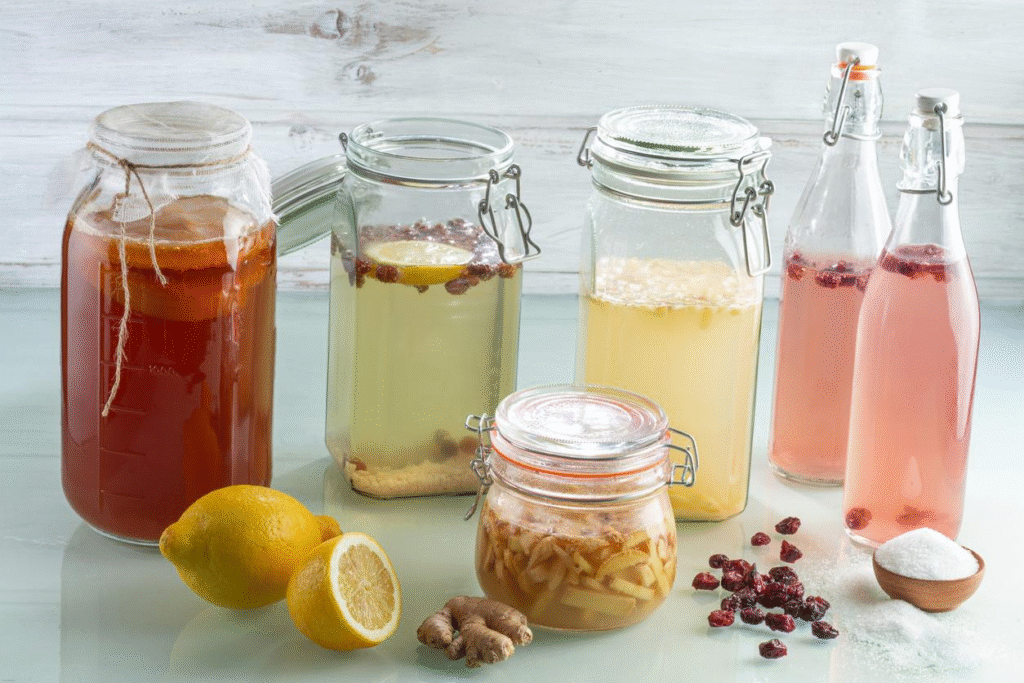
Some preparations deliberately push the kombucha towards a higher alcohol content, sometimes by adding extra yeast or greatly increasing the amount of sugar. The result is ‘strong kombucha’, which is actually an alcoholic beverage derived from kombucha and intended for adults.
This type of drink has very little in common with a classic kombucha for everyday consumption. It’s important not to confuse them with the kombucha you make from your SCOBY for those times when you’re looking for a light alternative to sodas.
More unintentionally, some homemade kombuchas can drift towards higher alcohol levels if :
This is another reason to keep a close eye on your fermentations, not to leave bottles forgotten for weeks in a warm corner, and to keep an eye on the balance of your culture.
At home, we don’t have a laboratory at hand to measure the precise alcohol content of kombucha. So we have to rely on indirect clues.
A few signals to watch out for.
If you have any serious doubts, it’s best to :
The idea is not to panic, but to keep a lucid relationship with what you are preparing.
Alcohol in kombucha can’t just be managed with recipes. It also has to do with the culture from which it comes.
A serious supplier of kombucha cultures:
When you work with a Natural Probio culture, you’re not improvising with a strain picked up at random. You start with a SCOBY whose behaviour has been observed, nurtured and selected. This doesn’t completely eliminate the question of alcohol, but it does make fermentation more predictable and easier to adjust.

The role of alcohol in kombucha can be summed up in a few simple ideas.
If alcohol is a sensitive subject or a strong constraint for you, it’s important to bear this in mind. Kombucha is not a « zero alcohol » drink. It’s a low-alcohol, flexible and lively drink.
With a healthy SCOBY Natural Probio, a balanced recipe and reasonable attention to fermentation times and sugar levels, you can make kombucha part of your daily routine and know what you’re doing. You’re not drinking a mysterious potion, but the result of a dialogue between yeast, bacteria, tea, sugar and time.
And this dialogue, in your kitchen, is led by you.
📚 Read also :
Sources :
📖 Go further: read our How to Make Kombucha at Home: The Complete Guide, with a batch calculator, timings and troubleshooting.
Ready to try it yourself?
Discover our live kombucha SCOBY, shipped in 24/48h with a step-by-step English guide. And for the curious, the history of kombucha is a fascinating read.