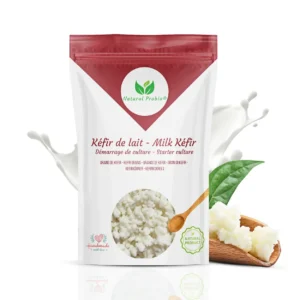
Kefir and fermented milk are often confused, but there are some notable differences that deserve your attention. If you’re looking to improve your digestive health or diversify your diet, understanding these two products can make all the difference.
Kefir is a fermented drink, rich in probiotics, obtained by the action of grains called kefir grains. These grains contain a symbiosis of bacteria and yeast, which gives kefir its unique properties.
Kefir originated in the Caucasus and has been consumed for centuries. Its roots go back to ancient traditions of fermenting milk. Caucasian nomads used it as a source of nutrition. Over the years, kefir has spread to different cultures, gaining in popularity thanks to its health benefits.
Kefir has a number of beneficial properties.
These properties make kefir a valuable addition to a healthy diet.
Fermented milk, often considered a beneficial dairy product, is characterised by its fermentation process. It is obtained by the action of bacterial cultures on milk, resulting in changes to its texture and taste.
The origins of fermented milk go back thousands of years. Ancient civilisations already consumed it for its nutritional and preservative properties. The ancient method of fermentation extended the shelf life of milk, offering nutritional benefits to those who needed them, particularly in Europe, Asia and the Middle East.
Fermented milk has a number of nutritional properties. It contains probiotics, which promote healthy intestinal flora. Thanks to fermentation, it is easier to digest lactose, which is beneficial for people with lactose intolerance. B vitamins, essential fatty acids and minerals such as calcium and phosphorus help to boost the immune system and improve bone health. By including fermented milk in your diet, you can support digestive health and boost your general well-being.
Kefir and fermented milk differ in the way they are prepared and the micro-organisms involved. Understanding these distinctions helps you choose the product that best meets your nutritional needs.
The differences between these products underline the importance of choosing according to your preferences and nutritional needs.
Choose the product according to your taste preferences and the recipe.
Kefir and fermented milk offer considerable health benefits. Consuming kefir strengthens the intestinal flora thanks to its rich probiotic content, thus supporting digestion. Studies show that the probiotics in kefir can reduce the symptoms of digestive disorders such as irritable bowel syndrome.
Including fermented milk in your diet also brings benefits. Drinking it helps to absorb nutrients, improve digestion and stimulate the immune system. The presence of probiotics helps to balance the intestinal flora and reduce infections.
Kefir and fermented milk provide essential nutrients. Kefir provides protein, B vitamins and minerals such as calcium and magnesium. Fermented milk, on the other hand, contains essential fatty acids and vitamins, contributing to cardiovascular and bone health.
Choosing kefir or fermented milk depends on your specific needs. If you’re looking for a more varied source of probiotics, kefir is beneficial. If you’re looking for a product rich in nutrients that can support your immunity, fermented milk is an excellent choice.
Choosing between kefir and fermented milk may seem complex, but it’s an opportunity to enrich your diet. Each of these products offers unique benefits for your digestive health and general well-being. Kefir stands out for its diversity of probiotics and creamy texture, while fermented milk provides a slight acidity and essential nutrients.
By incorporating one or the other into your daily routine, you support not only your intestinal flora but also your immune system. Take the time to explore these two options to find out which best suits your tastes and nutritional needs.