
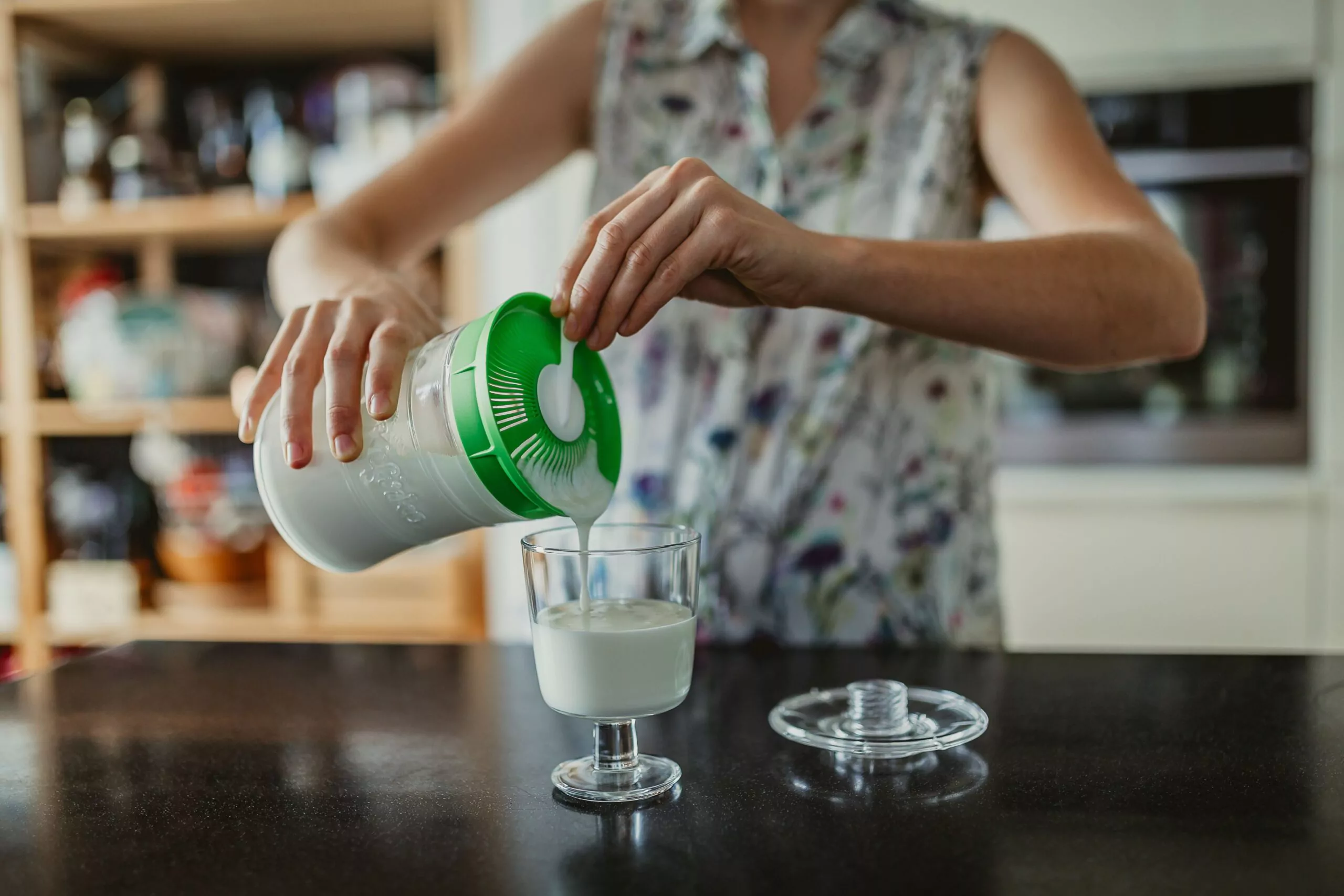
Kefir is one of those habits that quickly takes hold. At first, you taste it “just to see”, then you have a little glass now and then… and a few days later, you find yourself asking, “Can I drink it every day?” It’s an excellent question, because with fermented foods, common sense isn’t always enough. A food can be ‘natural’, ‘living’, ‘home-made’… and yet not be suitable for everyone, or for every dose.
In this guide, we’ll give you some clear answers, avoiding miracle promises and overly extreme statements. Yes, many people drink kefir every day and do very well. But the real answer depends on your digestion, your tolerance, your eating routine, the way your kefir is prepared, and also what you’re looking for: digestive comfort, regularity, dietary diversity, an alternative drink to soft drinks, or simple pleasure.
And as you’re taking a Natural Probio approach to homemade fermentation, I’ve also included a very useful supplement: kombucha. This is another fermented (tea-based), lactose-free drink, often much appreciated by those who want to vary their daily fermentations. For an easy start, you can use a reliable base such as Natural Probio’s authentic natural kombucha strain. Many people alternate between kefir and kombucha, depending on the season, mood and tolerance.
Before answering “yes” or “no”, we need to be clear about what we’re talking about. “Every day” could mean :
A small glass (50-100 ml)
A large glass (250 ml or more)
Several glasses a day
And that’s not the same thing at all.
What’s more, kefir is often referred to as a single product, when in fact there are several different types:
Homemade milk kefir (made with grains)
Commercial milk kefir (more or less lively, depending on the brand and process)
Water kefir (lactose-free)
Kefir that is more or less fermented, more or less acidic, more or less rich in yeast, etc.
So the right question is, “Can I incorporate kefir regularly into my routine? And at what quantity, to keep it comfortable and sustainable?”
Kefir is one of the fermented foods, and the advantage of fermenting is often regularity. Not because there’s any magic in “every day”, but because your digestion and your microbiota (the intestinal ecosystem) react above all to repeated habits.
In the modern diet, we sometimes eat a lot of ultra-processed foods and little ‘living’ diversity. Fermented foods add another dimension: natural acidity, different flavours, different textures, and a digestive experience unlike that of conventional milk.
Drinking kefir regularly can help some people settle into a more stable routine: drinking fewer fizzy drinks, snacking less sweetly, managing cravings better, or simply adding a ‘simple’ food to their daily routine.
We often hear “kefir is probiotic”. In practice, what interests you on a daily basis is not the word, but the fact that :
Kefir is a fermented food
It is often eaten fresh
It is generally better tolerated than milk by many people (especially when lactose is an issue, depending on the profile)
It can be a pleasant alternative to other drinks
And if you like that ‘everyday fermented drink’ logic, kombucha plays a similar role, with a different profile (fermented tea). For those who want a solid, simple starting point, the Natural Probio strain of authentic kombucha is an excellent option for getting started without weeks of tinkering.
In the vast majority of cases, yes, you can drink kefir every day, as long as you follow three rules:
The dose must be adapted to your body
Fermentation must be controlled (not too acidic, not unstable)
Your overall routine must remain balanced
Kefir is not a medicine, it’s a food. And like any food, tolerance depends on the person and the quantity.
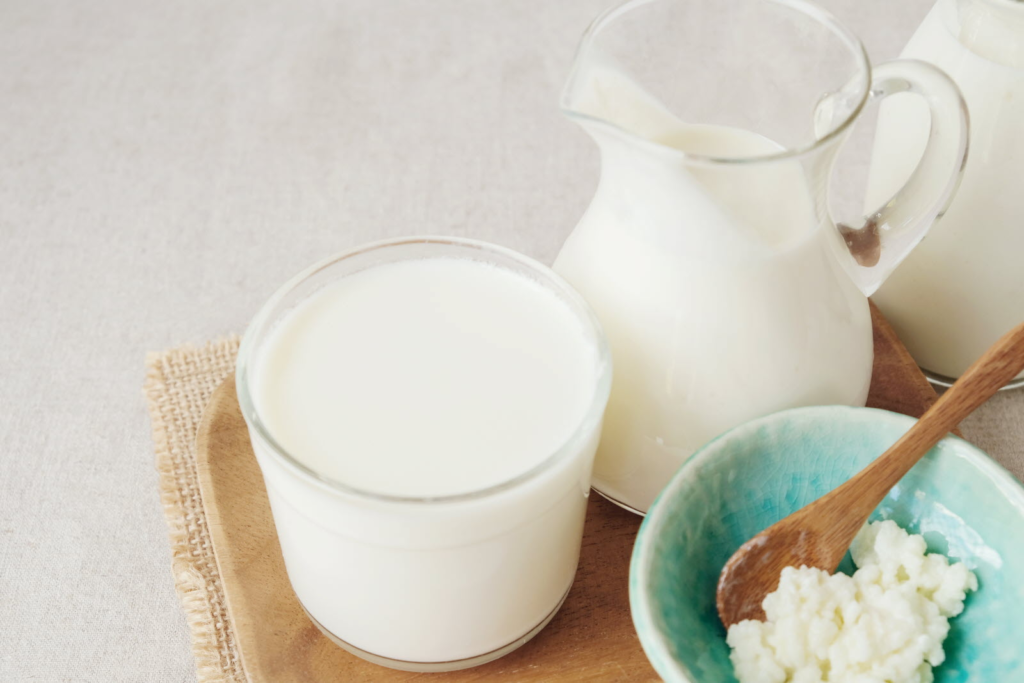
Without promising “guaranteed” results, here’s why many people choose daily kefir.
Many people describe a “calmer stomach”, more regular transit, or a more comfortable digestive sensation when they regularly consume a mild fermented food, in moderate quantities. This doesn’t mean it’s automatic. But repetition can help you see what works for you.
This is a very tangible benefit. Many health routines fail because they require too much effort. Kefir, on the other hand, can replace an everyday drink. Whether you’re having a juice, a soda, or a sweet snack, a small glass of kefir can give you a feeling of ‘something special’ without going overboard with sugar.
We underestimate the impact of simple habits. Preparing your kefir, straining it, chilling it, serving a glass… it becomes a ritual. And rituals often stabilise your diet, especially when you have a busy lifestyle.
That’s also why many people associate kefir and kombucha: two simple rituals, two different tastes. If you’re looking for variety, the Natural Probio kombucha strain lets you start a clean, regular homemade kombucha, as a complement to kefir.
Drinking kefir every day is often very well tolerated, but there are situations where you need to adjust.
Many people start off too strong. They drink a large glass on the first day, then conclude that “it’s not working”. In reality, it’s sometimes a question of adaptation, or simply of taking too much too soon.
The simplest solution: start small, then build up gradually.
Heavily fermented kefir is more acidic. For some people, this acidity can irritate the stomach or cause discomfort, especially on an empty stomach. It’s not necessarily the lactose or “ferments” that are the problem. It’s the acidity.
In this case:
Drink with a meal
Ferment for a slightly shorter time
Or opt for a milder kefir, then chill it to stabilise.
Even if fermentation transforms some of the lactose, some may remain. Some people with lactose intolerance tolerate it very well, others less so.
If you are very sensitive, you can :
Make your kefir with lactose-free milk
Or choose water kefir
Or alternate with kombucha (lactose-free), especially if you’re starting a “fermented beverage” routine: the Natural Probio strain of kombucha is ideal for an easy start.
Some people feel less comfortable with drinks that are very rich in yeast or very fizzy. It all depends on the fermentation process, how long it takes and how it’s stored.
If you suspect sensitivity, choose :
A milder kefir
Less time fermented
Well-chilled
And in small quantities
That’s the question that always follows. And the answer depends on your profile, but we can give a simple logic.
If your goal is a daily routine, a small glass is often enough. You don’t need to drink half a litre a day.
What matters most is :
Regularity
Digestive tolerance
Enjoyment
If you’re just starting out, start with a small amount. If you’re already used to it and tolerate it very well, you can increase it a little. But the idea remains the same: if you start to feel discomfort, that’s your cue to reduce or adjust the fermentation.
Rather than looking for the perfect amount, look for your “comfortable glass”:
The amount you can drink without discomfort
You like the taste of
And that you can hold over time
For many people, it’s a small glass a day or a glass every other day. Both are fine.
Drinking kefir every day doesn’t have to be a chore. Here are some approaches that work well.
This is the simplest version: filtered kefir, put in the fridge and serve chilled.
Some people like kefir as a snack, others with a meal. If you have a sensitive stomach, during or after a meal may be more comfortable.
If you want to vary without changing the base, you can drain some of your kefir and make kefir cheese from it. This changes the texture, the use and gives your fermentation a different ‘shape’.
Many people drink :
Milk kefir some days
Kombucha on other days
Or a small glass of one, then the other as the mood takes them
It’s a great way to avoid fatigue. And if you want to start making homemade kombucha without any headaches, the Natural Probio authentic kombucha strain is a very practical base.
There are situations where “every day” may be too much at first, or where personalised advice is needed.
With a very reactive intestine, any change can provoke reactions, even if the food is “good”. In this case, kefir can be tried very gradually, and sometimes every other day at first is more comfortable.
After a stomach bug, a period of stress or a disturbed bowel movement, you may be temporarily more sensitive. Kefir can help some people, but it should be introduced gently.
If your problem is an allergy to milk proteins (not lactose intolerance), milk kefir is not the solution, as the proteins remain. In this case, it’s better to turn to non-milk fermentations: water kefir, kombucha, etc.
Drinking kefir every day is only enjoyable if the kefir is good. And good kefir is :
A fresh taste (not a strong or strange smell)
Balanced acidity
A pleasant texture
Stable fermentation
Homemade kefir is often more ‘customisable’. You adjust the fermentation and taste. Commercial kefir is more practical, but not all kefir is the same.
If your goal is a daily routine, choose the option that allows you to be regular without stress.
Many beginners ferment too long, thinking “the stronger, the better”. In reality, kefir that is too acidic can reduce pleasure and tolerance.
The best daily kefir is one that you enjoy drinking and that your body accepts.

In this case, think about your overall routine.
If you replace a soda with a small glass of kefir, it’s often a good exchange, especially if you keep your diet rich in fibre (vegetables, fruit, legumes) and stay properly hydrated.
And if you like your drinks a little fizzy and tangy, kombucha can be a great addition to avoid falling into a monotonous routine. The Natural Probio strain of kombucha makes it easy to get started and make a regular homemade drink.
For most people, no, it’s not bad. The important thing is to adjust the quantity, choose a well-fermented kefir (not too acidic), and listen to your digestion.
There is no single perfect amount. Many people feel fine with one small glass a day. If you’re just starting out, start smaller and build up gradually.
Often, it’s a question of dosing too much too quickly, or of the kefir being too acidic. Start with a micro-dose, drink with a meal, and adjust the fermentation.
Many people with lactose intolerance tolerate it better than milk, as the fermentation process transforms some of the lactose. If you are very sensitive, try lactose-free milk, or alternate with lactose-free drinks such as kombucha.
Yes, kombucha is a lactose-free fermented drink. If you’re looking for an easy way to get started, Natural Probio’s authentic kombucha strain is a handy base for making regular homemade kombucha.
Yes, you can drink kefir every day, and for many people it’s an excellent habit. But success depends on three things above all: the right dose, a pleasant kefir (not too acidic), and a gradual introduction if you’re just starting out or if you have sensitive digestion.
If you’re looking for a routine that’s even easier to stick to over the long term, think about varying your fermentations too. Alternating kefir and kombucha is a very simple strategy for keeping things fun and regular. To get started with kombucha at home on a reliable basis, discover the Natural Probio strain of authentic natural kombucha.