
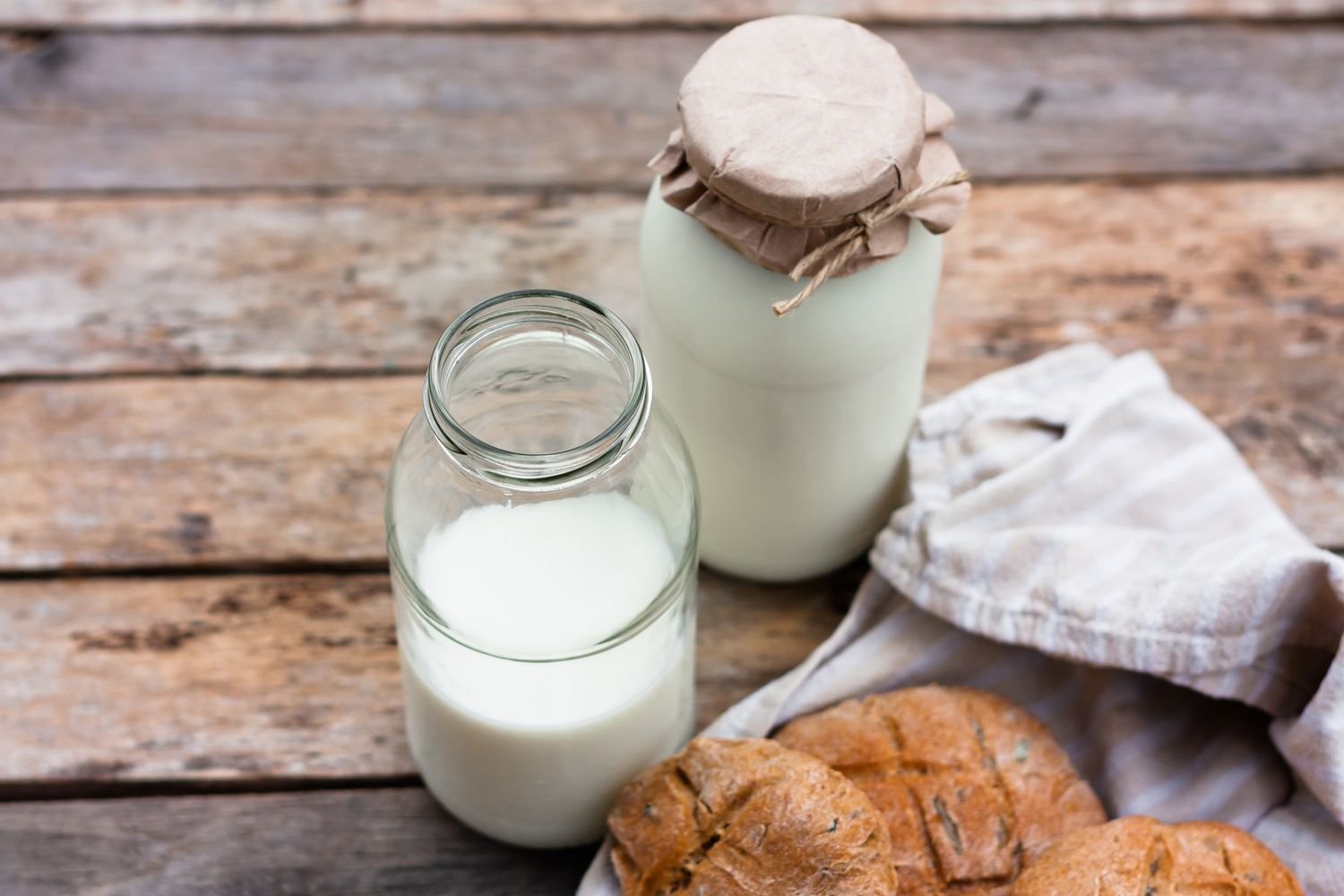
Milk kefir often puzzles people who have trouble digesting dairy products. On the one hand, it’s ‘milk’, so you immediately think ‘lactose’ and discomfort. On the other hand, it’s widely claimed that fermentation ‘predigests’ some of the lactose, making the drink gentler on the gut. So what are we to believe? Can you really drink milk kefir if you’re lactose intolerant, or is it a bad idea?
In this comprehensive guide, we’ll cover the basics (lactose, intolerance, fermentation), understand what milk kefir actually does during fermentation, see why some intolerant people tolerate it very well, while others don’t, and above all, learn how to try it intelligently and gradually. The aim is not to promise you a miracle, but to give you a safe, clear and practical method, as if you had a ‘hands-on’ nutrition coach at your side.
And by the way, if you like fermented foods and are also looking to vary your preparations, you can discover the Natural Probio authentic kombucha strain via this page: natural authentic kombucha strain. It’s a different kind of fermentation, a different world, but often people who adopt kefir also love exploring kombucha.
Before we talk about kefir, we need to clarify one essential point: lactose intolerance is not the same thing as an allergy to milk proteins.
Lactose intolerance is linked to difficulty in digesting lactose, the sugar naturally present in milk. To digest it, your small intestine needs an enzyme called lactase. When lactase is insufficient, the lactose reaches a lower level in the digestive system and can cause bloating, gas, pain and even diarrhoea.
Allergy to milk proteins (casein, whey) is an immune reaction. This is no longer a case of “difficult digestion”, but a potentially serious allergic mechanism. In this case, milk kefir is generally not a solution, as it still contains milk proteins.
So, first rule of thumb: if you have a confirmed allergy to milk proteins, or a strong suspicion of one, it’s important to be cautious and seek the advice of a health professional. Lactose intolerance is much more common and can often be modified.
Lactose intolerance is not an on/off switch. Many people tolerate small amounts, especially when lactose is consumed with a meal. Others react to just a few sips of milk. There are also temporary situations: after gastroenteritis, after a period of digestive stress, after certain treatments, the intestine may be more fragile and digest lactose less well for a few weeks.
That’s why milk kefir can be ‘adapted’ to certain profiles and less so to others. The key is to understand the fermentation mechanism and to progress gradually.
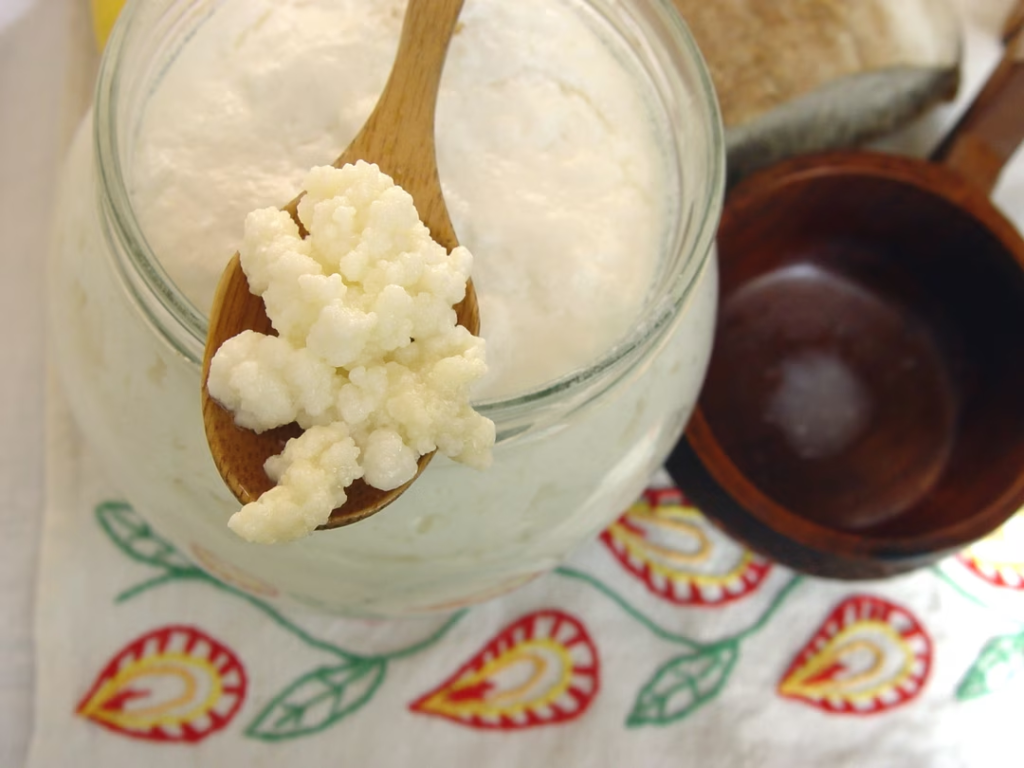
Milk kefir is a fermented drink made by adding kefir grains to milk. These grains are a symbiosis of micro-organisms (bacteria and yeasts) assembled in a gelatinous structure. During fermentation, they feed on available sugars, including lactose.
Yes, part of the lactose is transformed during fermentation. The micro-organisms metabolise the lactose, producing lactic acid and other compounds (depending on the time, temperature and type of milk). The result: the taste becomes more acidic, the texture can thicken, and the drink often becomes more digestible for many people.
But be careful: “some” does not mean “all”. The level of lactose remaining depends on a number of factors. If you are very sensitive, this detail changes everything.
There are four main levers: time, temperature, quantity of grain and type of milk.
The longer the fermentation, the greater the transformation of lactose. But over-fermentation can also make the drink very acidic, sometimes less pleasant and not necessarily better tolerated by everyone.
A warmer temperature (within a reasonable range) also speeds up fermentation. Kefir made in a very hot kitchen in summer will often be more ‘active’ than in winter.
The more grains you use in relation to the volume of milk, the faster the fermentation process will progress, as you will have more micro-organisms to start with.
Finally, depending on the milk (whole, semi-skimmed, goat’s milk, etc.), the texture, speed of fermentation and sometimes tolerance may vary.
Although it still contains lactose, kefir is not milk “as is”. It is a processed food. Fermentation alters some of the sugars and can also change the way your digestive system reacts. Many intolerant people explain that they tolerate kefir better than conventional milk, especially if they start with small quantities.
This is an important point: tolerance is often a question of dose, progression and context (on an empty stomach, with a meal, etc.).
The most honest answer is: often yes, but not always, and never without testing progressively.
If your intolerance is mild to moderate and you can already tolerate certain fermented products (yoghurt, mature cheeses), there’s a good chance you’ll be able to tolerate small quantities of milk kefir, especially if the fermentation process is sufficiently advanced.
If you have a general digestive sensitivity (bloating, unstable transit) but not a confirmed severe intolerance, kefir can also be an interesting drink, as you are moving away from ‘raw’ milk and into a fermented product.
If you react very strongly to the slightest lactose, if you have very active irritable bowel syndrome, if you’re in the middle of a period of digestive fragility, or if you’ve never tried fermented products, it’s best to go even more slowly.
And if your problem is not lactose but a reaction to milk proteins, milk kefir can trigger symptoms, as the proteins remain present even if the food is fermented.
The aim here is to avoid two classic mistakes: drinking a large glass “just to see”, and then concluding that “it doesn’t work” because you’ve had a reaction. You test kefir like you would a new fermented food: small, slow, regular.
Start with a really small amount. One or two tablespoons are enough for the first try. Preferably take it with a meal, not on an empty stomach. Observe your body over 24 hours.
If all goes well, you can increase the dose slightly the next day or two. Gradually increase to half a glass, then a glass, without skipping a beat. This approach is much more reliable than the “big glass at once” test.
Above all, it respects the fact that digestive tolerance is often built up over time, especially when it comes to fermentation.
For many people, taking it with lunch or dinner is better than taking it on an empty stomach in the morning. On an empty stomach, the intestine is sometimes more reactive, and you run the risk of confusing “reaction to lactose” with “reaction to acidity” or simply “reaction to a new food”.
If you’re sensitive, start with a full meal. When you’re reassured, you can try other times.
If you make your own kefir, you can adjust the fermentation time. A longer fermentation can reduce the lactose more, but will make the kefir more acidic. If you’re sensitive to acidity, this is something to keep an eye on.
Some people find a balance with a ‘standard’ fermentation, then a second short fermentation in a cool place, which sometimes softens the taste. The best kefir is not the strongest, but the one that tastes good and suits you.
The choice of milk doesn’t solve everything, but it can help.
Many people find whole milk ‘softer’ to ferment, with a more stable texture and a more satiating feel. Fat does not remove lactose, but it can slow gastric emptying and make the digestive experience more comfortable.
Semi-skimmed milk can give a thinner kefir, which can be more acidic quickly, depending on the conditions.
Some intolerant people say they tolerate goat’s milk better. This is not a universal rule, but it may be worth testing, always in micro-doses. The taste is more distinctive, but the fermentation can be very pleasant.
Yes, you can make kefir with lactose-free milk, and it’s even a very good option if you’re very sensitive. Lactose-free milk is not ‘sugar-free’, it simply contains lactose already ‘broken down’ into simpler sugars. The grains can ferment, sometimes more quickly. You therefore need to monitor the fermentation time to avoid an overly acidic result.
This option allows many intolerant people to enjoy the kefir ritual without stress.
Sometimes the problem is not the kefir itself, but the way it was made or consumed.
If your kefir ferments too little, the lactose is less processed. You’re then drinking a drink that’s fairly similar to milk, but with more micro-organisms, and your intestine may react.
On the other hand, over-fermentation can result in a very acidic drink. Some people tolerate this very well, while others experience gastric discomfort, burning or discomfort that has nothing to do with lactose. You need to know the difference.
This is mistake number one. Even if you tolerate kefir, going from “nothing” to “a big glass every day” all at once can cause a reaction, simply because your digestive system isn’t used to it.
If you’re testing kefir on the same day that you’re eating something very rich or very sweet, or when you’re stressed, you’ll find it hard to know what’s causing the discomfort. During the test phase, simplify the context a little.

Even when we’re talking about lactose intolerance, many people are interested in kefir because it’s ‘living’, fermented and associated with greater dietary diversity. Without making any medical promises, it’s fair to say that fermented foods occupy a special place in wellness routines, because they provide a ‘fermentation’ dimension not found in ultra-processed foods.
If you already love fermentations, you might also enjoy kombucha, which is a fermentation of tea. At Natural Probio, you can find a ready-to-start base with this strain of natural authentic kombucha, ideal for those who want a simple, lively project at home.
If your intolerance is severe, you don’t have to give up the idea of fermented drinks. There are several possible routes.
This is often the simplest way. You keep the kefir experience, texture and taste, and greatly reduce the risk of lactose-related reactions. You’ll just need to adjust the fermentation, as it can go faster.
Water kefir is another form of fermentation, with other grains, and contains no lactose. For many intolerant people, this is the most comfortable solution. If your aim is to avoid dairy products altogether, this is a logical alternative.
Kombucha is lactose-free too. If you’re looking for a fizzy, tangy, fermented drink, this is a great way to go. And if you want to start with a reliable base, the Natural Probio kombucha strain can help you get a more consistent homemade kombucha right from the start.
This is a very underestimated point. Many people think “I’m lactose intolerant” when their symptoms may be linked to something else, or a mixture.
Bloating, gas, abdominal pain and sometimes diarrhoea in the hours following consumption are common. But these symptoms are not 100% specific.
A fermented drink is acidic and sometimes fizzy. For some, the acidity can irritate the stomach, while for others, the ‘liveliness’ can speed up an already rapid transit.
That’s why the most reliable method is still progressive micro-dosing, in a stable dietary context.
You can adapt your practices to increase your chances of tolerance.
Fermentation that is too hot and too long can result in aggressive kefir. A milder kefir, lightly fermented but not extreme, may be more acceptable to some. Others, on the other hand, prefer a more advanced fermentation to further reduce the lactose. The idea is to test by adjusting one parameter at a time.
Poorly filtered kefir, with damaged grains, or insufficient hygiene, can result in a strange-tasting, more irritating drink that can cause discomfort. Clean equipment and a regular routine make a real difference.
Some people tolerate kefir better when accompanied by it, rather than drinking it on its own. A small glass after a meal, or as part of a meal (mixed with a little fruit, for example, depending on your tolerance), may be more comfortable.
Not necessarily, but it’s a good sign. Yoghurt is fermented and often better tolerated than milk. Kefir is a different kind of fermentation, sometimes more complex, so tolerance varies. That said, many people who tolerate yoghurt also tolerate kefir, especially in small quantities at first.
It depends on your sensitivity and background. Some people can tolerate mature cheeses (often very low in lactose) and some fermented cheeses, even if they can’t tolerate milk. Kefir can be part of a “choose the right dairy products” approach rather than “cutting out everything”.
No, you must avoid this type of idea. Lactose intolerance is linked to the enzyme lactase, and it does not magically disappear. On the other hand, some people learn to manage their tolerance better, choosing fermented products, adjusting doses and reducing symptoms. This is an important difference.
Once you start enjoying kefir, you realise that there’s a whole world around home fermentation. The real benefit is often regularity and simplicity: having a ritual, a homemade drink, and understanding how your body reacts.
If you’d also like to explore kombucha, Natural Probio offers a simple solution to get you started, with an authentic natural strain of kombucha. Many people alternate between kefir and kombucha, depending on the season, the mood and their current tolerance.
Yes, in general some remains, but often less than in unfermented milk. The amount depends on the fermentation time, temperature, grain/milk ratio and type of milk.
It’s possible, but it’s better to use lactose-free milk for fermentation, and to start with micro-doses. If you have a strong reaction to small quantities, consider water kefir or kombucha instead.
Start with one or two tablespoons with a meal, observe for 24 hours, then increase very gradually over a week. Avoid a large glass from day one.
Many people tolerate it better during or after a meal, rather than on an empty stomach in the morning. But it all depends on how sensitive you are to acidity and on your digestive system.
Water kefir and kombucha are lactose-free alternatives. To get started easily with kombucha at home, you can use a reliable base such as the Natural Probio kombucha strain.
Milk kefir can be an interesting option for many lactose-intolerant people, as fermentation transforms part of the lactose and modifies the food. But it’s not a universal promise. Success depends above all on a gradual approach, well-controlled fermentation and the choice of milk best suited to your level of sensitivity.
If you’re just starting out, remember this: micro-dose, during a meal, progress slowly. And if you like the idea of fermented drinks but are worried about milk, explore other fermentations too. Natural Probio allows you to build up a simple, lively routine, in particular with this strain of natural authentic kombucha to get your homemade kombucha off to a serious start.