
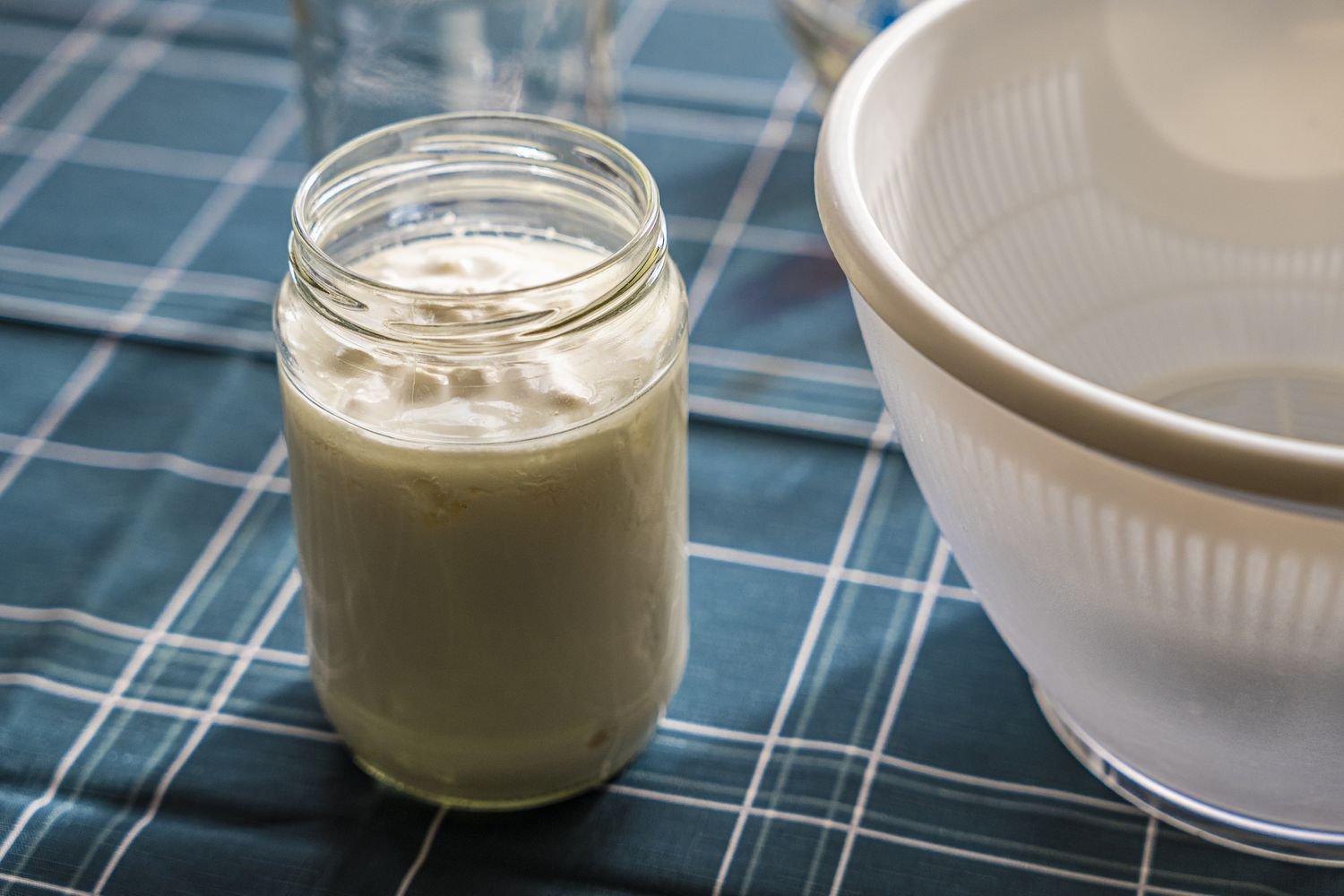
When we start milk kefir, we often ask ourselves the same question: “OK, I like it… but how much should I drink?” And that’s a very smart question, because with fermented foods, quantity counts as much as quality. Drinking a tablespoon of kefir isn’t the same experience as drinking a big glass every morning. Above all, the ‘best’ quantity is not universal: it depends on your digestion, your tolerance, your objective (intestinal comfort, routine, pleasure, replacing a sugary drink), and the way your kefir is fermented.
In this comprehensive guide, we’re going to keep things simple and to the point. You’ll leave with :
A method for finding your ideal dose
Guidelines for different profiles (beginners, regulars, sensitive intestines, lactose intolerance)
The mistakes that give the impression that “kefir isn’t for me”.
How to adjust fermentation for better tolerance
And how to vary with other fermentations if you want an even easier routine.
What’s more, if you’re looking for a lactose-free alternative (or just for pleasure), kombucha is an excellent alternative: it’s a fermented drink made from tea, so it’s naturally lactose-free. For an easy start with a reliable base, Natural Probio offers this strain of authentic natural kombucha. Many people alternate between kefir and kombucha to maintain a pleasant, long-lasting routine.
We’d all like a simple answer like “drink X ml a day and you’ll be fine”. But the reality is more nuanced.
Milk kefir is not a uniform product. Depending on how you ferment it, it can be :
milder, more dairy
Thicker
More acidic
Sometimes slightly fizzy
More or less rich in yeast, depending on the conditions
So two people can say “I drink one glass a day”, but if one drinks a mild kefir and the other a highly fermented kefir, the digestive impact will not be the same.
Some people have a very stable digestive system. They can take a large glass of kefir without any trouble. Others have sensitive, reactive intestines, or are going through a period of digestive fragility. For these people, the best dose is often smaller at first.
If your aim is simply to add a fermented drink to your diet, a small glass will suffice.
If you replace a daily sugary drink (soda, juice), you may drink a little more… but make sure it’s still comfortable and that the kefir is pleasant.
If you’re looking for a stable digestive routine, regularity is often more important than quantity.
The best way to decide is to find your “comfortable dose”.
Your comfortable dose is :
The amount you can drink without discomfort
The amount you like to taste
The amount you can keep down over time (without forcing yourself)
And if you have to choose between ‘more’ and ‘regular’, choose ‘regular’. A small glass that you hold for weeks is often better than a large glass that disgusts you or makes you bloated.
I’m going to give you some simple guidelines. These are not medical prescriptions, but practical ranges.
Objective: to test tolerance and accustom the digestive system.
Start small, even if it seems “too little”. One or two tablespoons, then a small glass, then a small glass. The idea is to gradually build up over several days.
Why? Because a lot of discomfort comes from starting off too aggressively. Because a lot of discomfort comes from starting off too aggressively.
Objective: maintain a pleasant routine.
A small glass a day is often fine. Some people go up to one glass a day if all goes well.
But be careful: if you exceed your ‘comfortable dose’, kefir becomes less pleasant, and you lose the main benefit: regularity.
Objective: to remain smooth and stable.
It’s best to start with micro-doses and opt for a milder, less acidic kefir, eaten with a meal. The quantity can be very small at first.
Some people feel better with a small glass every other day at first, rather than every day.
Objective: minimise lactose and avoid discomfort.
Many intolerant people tolerate kefir better than milk, because fermentation transforms some of the lactose. But some may remain.
So the strategy is :
Start small
Test during a meal
And if you’re very sensitive, opt for kefir made with lactose-free milk, or alternate with lactose-free drinks such as kombucha.
On this point, kombucha is interesting because it is lactose-free. And for an easy start at home, the authentic Natural Probio kombucha strain is a reliable base, so you don’t have to experiment too much.
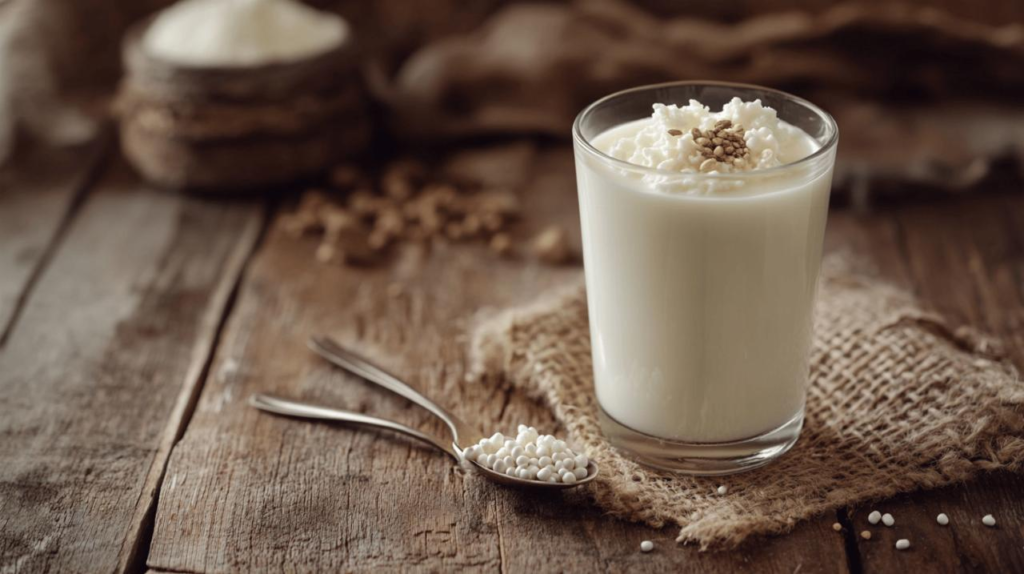
A lot of people want to “get there fast” with one glass a day. But with kefir, it’s better to climb like a staircase, not a lift.
Take a small amount with a meal. Observe. If all goes well, go on to step 2.
Keep to this dose. If your digestion is good, you can increase it.
Only if you want to and if you tolerate it. It is not compulsory.
The aim is not to beat a kefir record. The aim is to create a ritual that suits you.
This is a crucial point that is all too often overlooked.
Highly fermented kefir can be more difficult to drink in large quantities, especially for sensitive stomachs. Some people tolerate it very well, others not.
If you want to drink more, a milder kefir may be easier.
Mild, stable kefir is often the best ‘daily kefir’. It goes down better, it’s more pleasant, and you don’t feel like you’re drinking something too aggressive.
Filtering at the right moment and chilling stabilises the taste and makes the drink sweeter for many people.
Quantity is not enough. Timing is everything.
Acidic kefir on an empty stomach in the morning may be uncomfortable for some people. If you’re sensitive, it’s better to drink it during or after a meal.
It’s a simple strategy: the stomach receives the fermented food along with other foods, which can reduce the impact of acidity and improve tolerance.
Some people love a little drink as a snack. It can help you avoid a sugary snack, especially if you’re used to snacks.
You might think that your ideal dose is small, but in reality this is a methodological error.
That’s the classic. The result: bloating, discomfort, the impression that “kefir doesn’t suit me”. But many people would have tolerated a gradual increase in their intake just fine.
Highly fermented kefir can be delicious in small quantities, but too aggressive in large doses.
Some people react to acidity but not to lactose. In this case, changing the fermentation and the timing may suffice.
The perfect dose doesn’t exist. What does exist is a dose that suits you today. And that can change tomorrow.
Some sportspeople like kefir as a digestible ‘protein’ snack. In this case, a small glass on a regular basis may be worthwhile.
But if you consume it just before training, the acidity can be a problem. Try it afterwards instead.
Stress can make digestion more sensitive. At such times, a smaller dose may be more comfortable, even if you usually drink more.
Acid kefir can sometimes make reflux worse for some people. In this case:
Choose a milder kefir
Consume during a meal
Reduce the quantity
And observe
The best option is kefir made with lactose-free milk, or alternating with a lactose-free fermented drink such as kombucha.
What’s more, alternating kefir and kombucha is often a very practical strategy: you keep the pleasure of fermentation, without forcing yourself onto a single drink. The Natural Probio kombucha strain is a solid base for getting started with homemade kombucha.
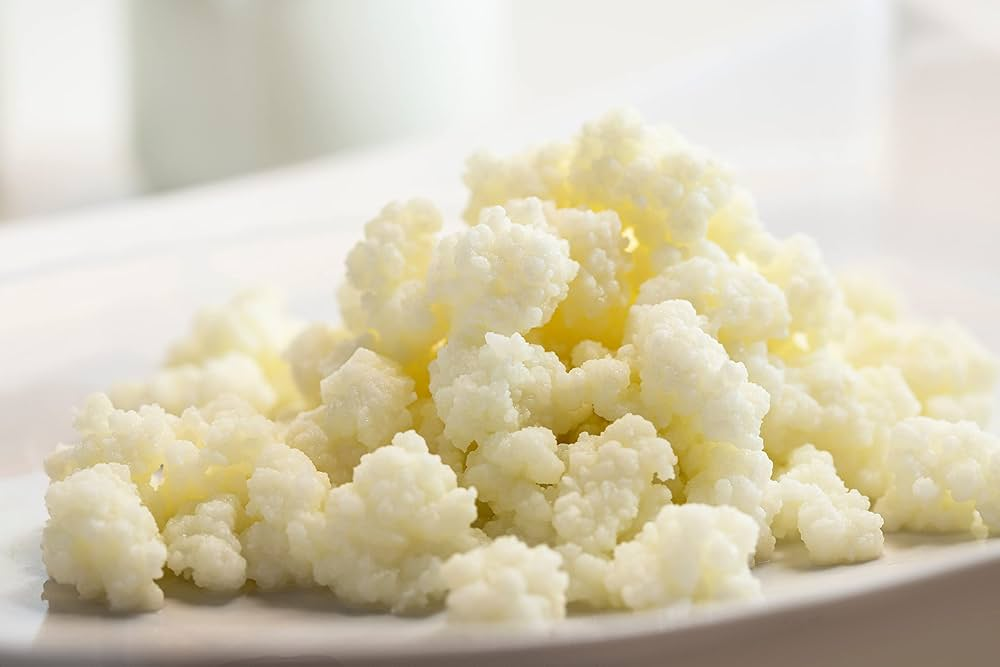
Here are some concrete examples that many people find easy to stick to.
Take a small amount with a meal, then gradually increase. Once tolerated, take a small glass at regular intervals.
A small glass a day, at the same time, without asking too many questions.
Milk kefir some days
Kombucha on other days
This prevents fatigue. And it’s also interesting if you want to limit lactose, as kombucha is lactose-free.
Some days, you drink a small glass.
Other days, you drain the kefir cheese and use it as a spread or in a sauce.
This is a very practical way of incorporating kefir without having to drink it all the time.
Milk kefir has a creamy texture and a tangy milky taste. Kombucha is fizzier, more like fermented tea, and often more refreshing.
If you like both, alternating is often the best strategy.
And to get you off to a good start, Natural Probio’s authentic natural kombucha strain gives you a reliable basis for regular kombucha.
Start with a small amount (micro-dose) during a meal, then gradually increase over several days. The aim is to assess tolerance without causing discomfort.
No. A small, regular drink is often enough. What counts is regularity and tolerance, not the maximum quantity.
This is often because you increase the dosage too quickly, or because your kefir is very acidic. Reduce the dose, drink with a meal, and adjust the fermentation.
Many intolerant people tolerate kefir in small quantities, but some lactose may remain. If you are very sensitive, use lactose-free milk, or alternate with lactose-free drinks such as kombucha.
Yes, kombucha is lactose-free. For an easy start at home, the Natural Probio kombucha strain is a reliable base.
There is no perfect universal dose. The right quantity of milk kefir per day is the one that gives you pleasure, regularity and good digestive comfort. Start small, increase gradually, adjust the fermentation and listen to your body.
And if you want an even simpler and more varied routine, consider alternating with other lactose-free fermented drinks like kombucha. For an easy start on a reliable basis, discover the Natural Probio strain of authentic natural kombucha.