
18,90€


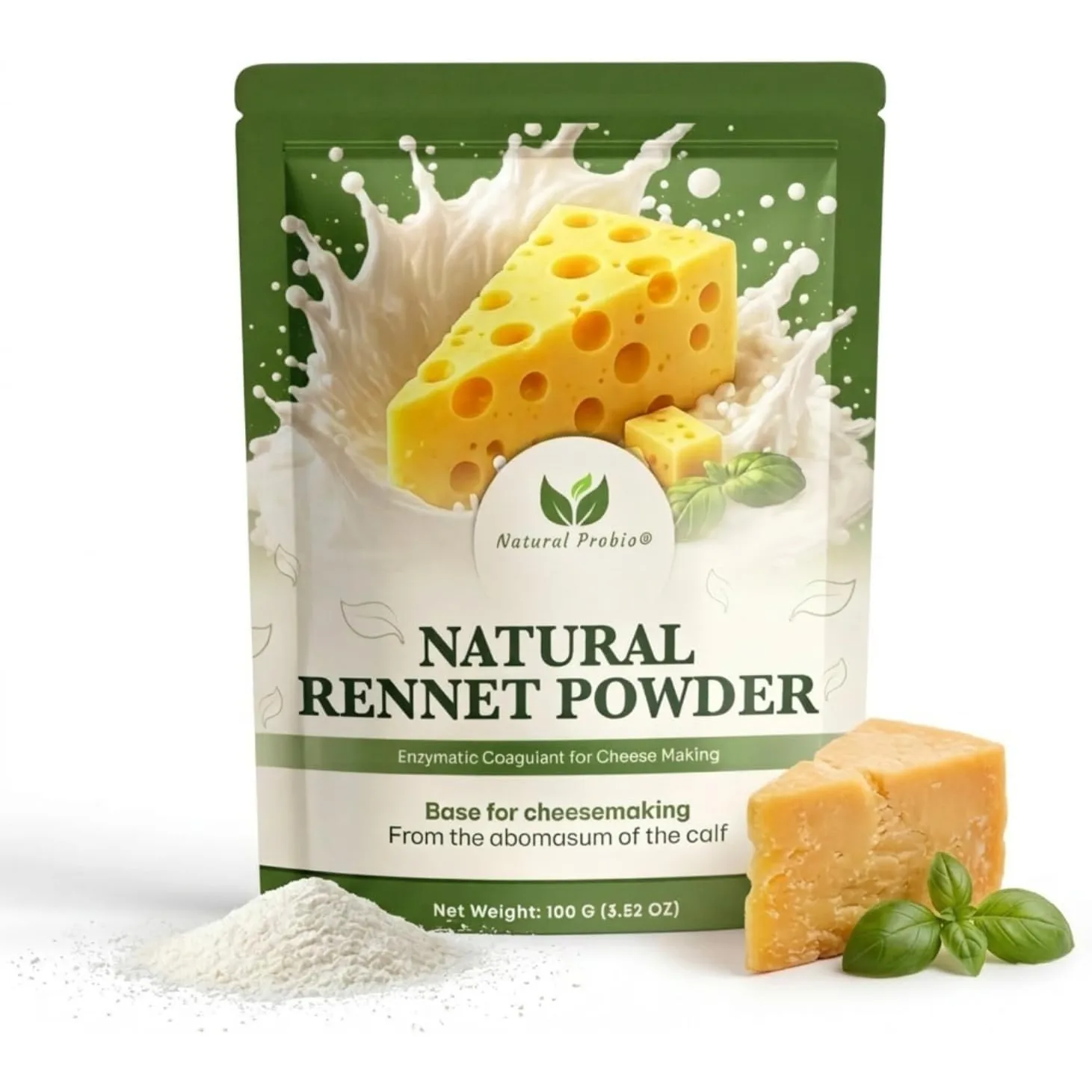
One level scoop of the spoon supplied, about 1 gram, sets 5 to 10 litres of milk. One bag therefore covers up to 500 litres, from mozzarella to tomme.
A resealable bag holding 100 grams of calf rennet powder, with its measuring spoon. The powder is crystalline and light beige.
A QR code on the bag opens our recipe library. If your curd does not set, write to us. We look for the cause with you and answer within 1 working day.
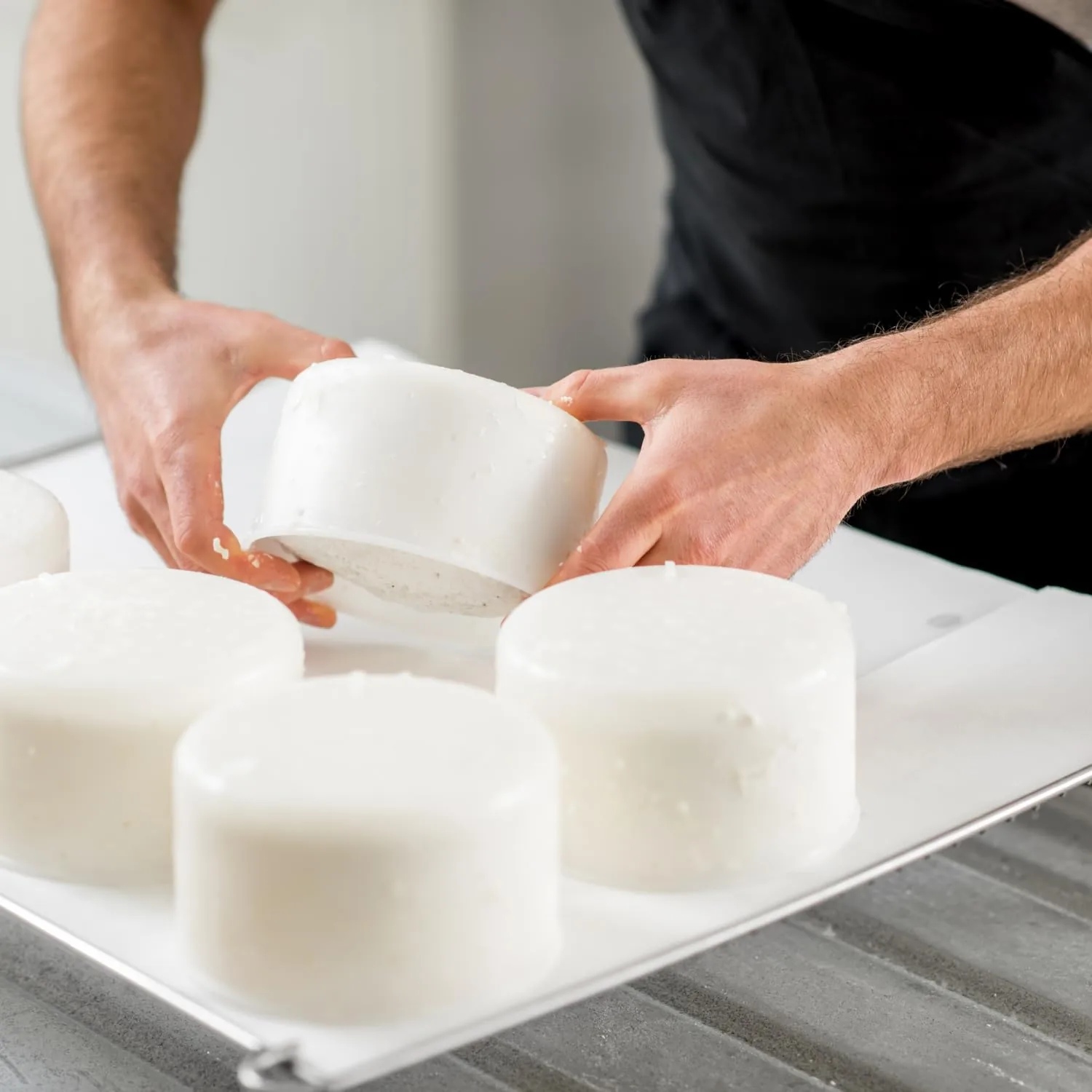
From the freshest to the most aged, with the same bag.
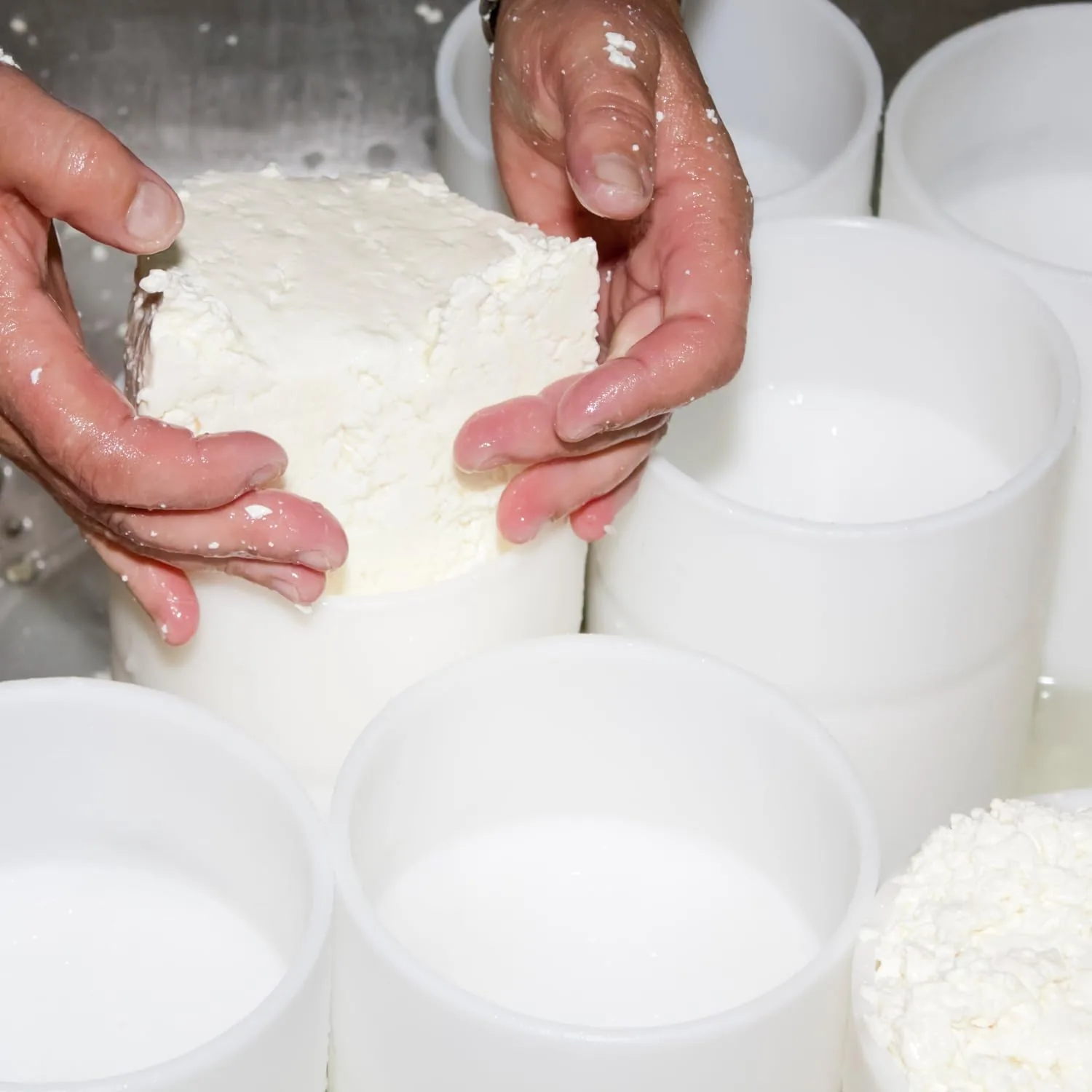
The result depends on the milk, the temperature, how long the curd sets and how long it drains. The same steps give very different cheeses.
Natural Probio, cheesemaking ingredients so your cheeses work at home.
The powder is more concentrated and keeps longer, because there is no water in the bag. It is measured by the spoon rather than drop by drop, which is far easier once you work with several litres of milk. Liquid rennet stays handy for 1 or 2 litres at a time. Both give the same kind of curd.
One level scoop of the spoon supplied weighs about 1 gram and sets 5 to 10 litres of milk. A 100 g bag therefore covers up to 500 litres, which means hundreds of cheeses. It lasts a very long time, even with regular use.
Yes. Cow, goat and sheep milk all set with this rennet. Choose whole milk, raw or pasteurised. The only milk to avoid is UHT, whose proteins have been altered by the high temperature and which no longer forms a proper curd.
Three causes come up again and again. The milk was UHT. The temperature was too low or too high, it has to stay between 30 and 35 °C. Or the milk was stirred while it was setting. Start again with whole non UHT milk and a thermometer, and leave it completely alone for at least 45 minutes. Write to us with a photo if it happens again.
Bag tightly closed, dry, cool and away from light. The fridge is fine. Moisture damages the powder more surely than warmth, so close the bag straight after each use and always use a dry spoon.
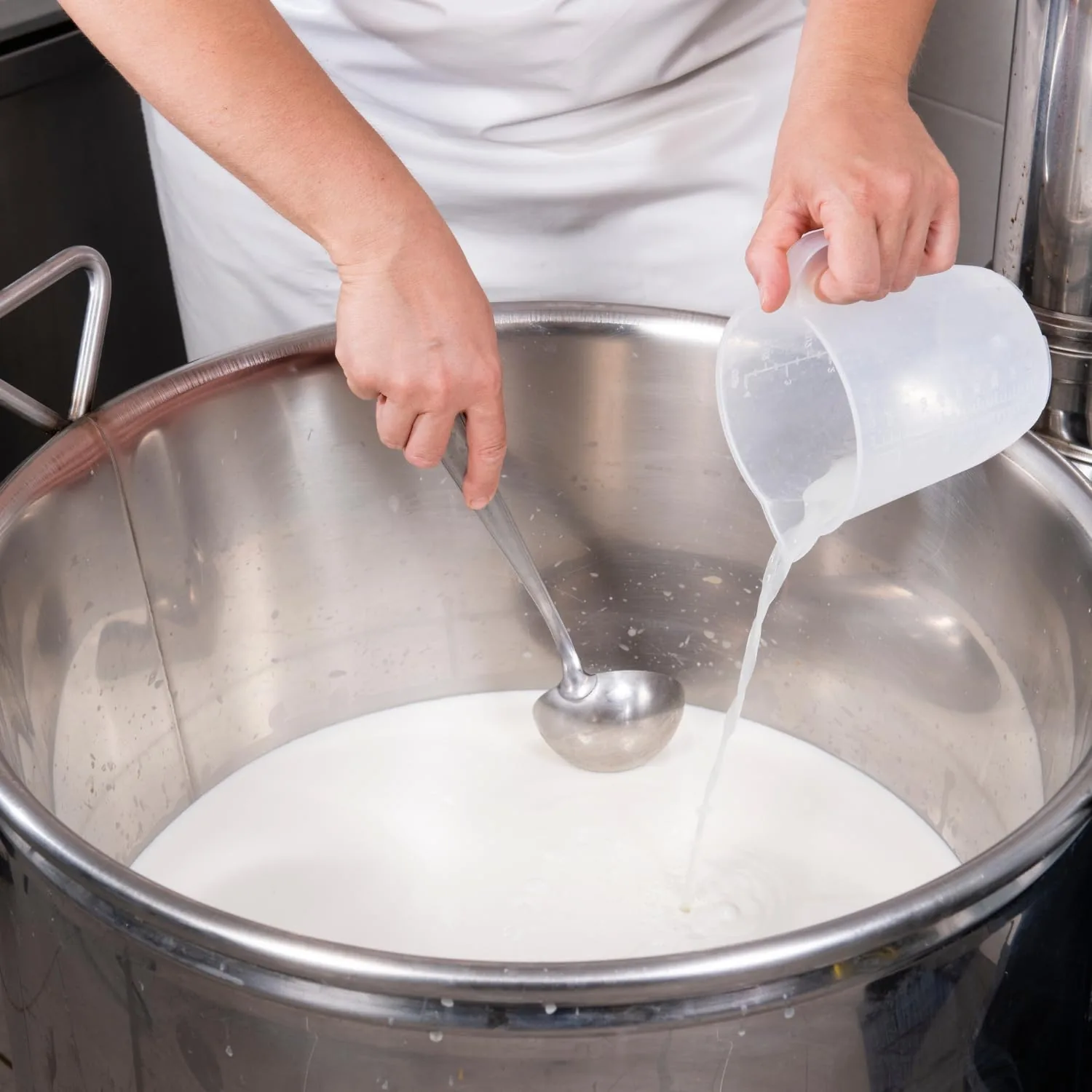
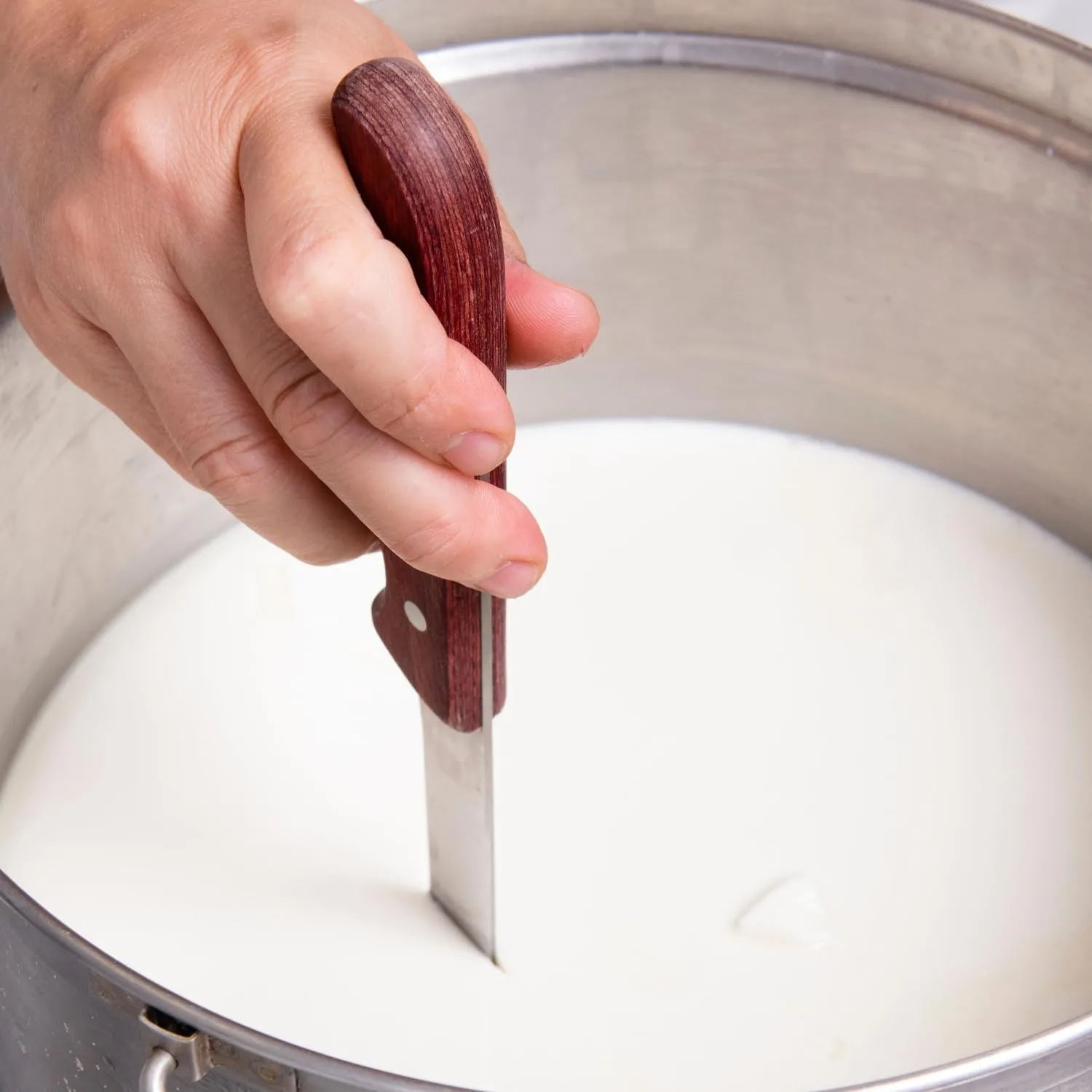
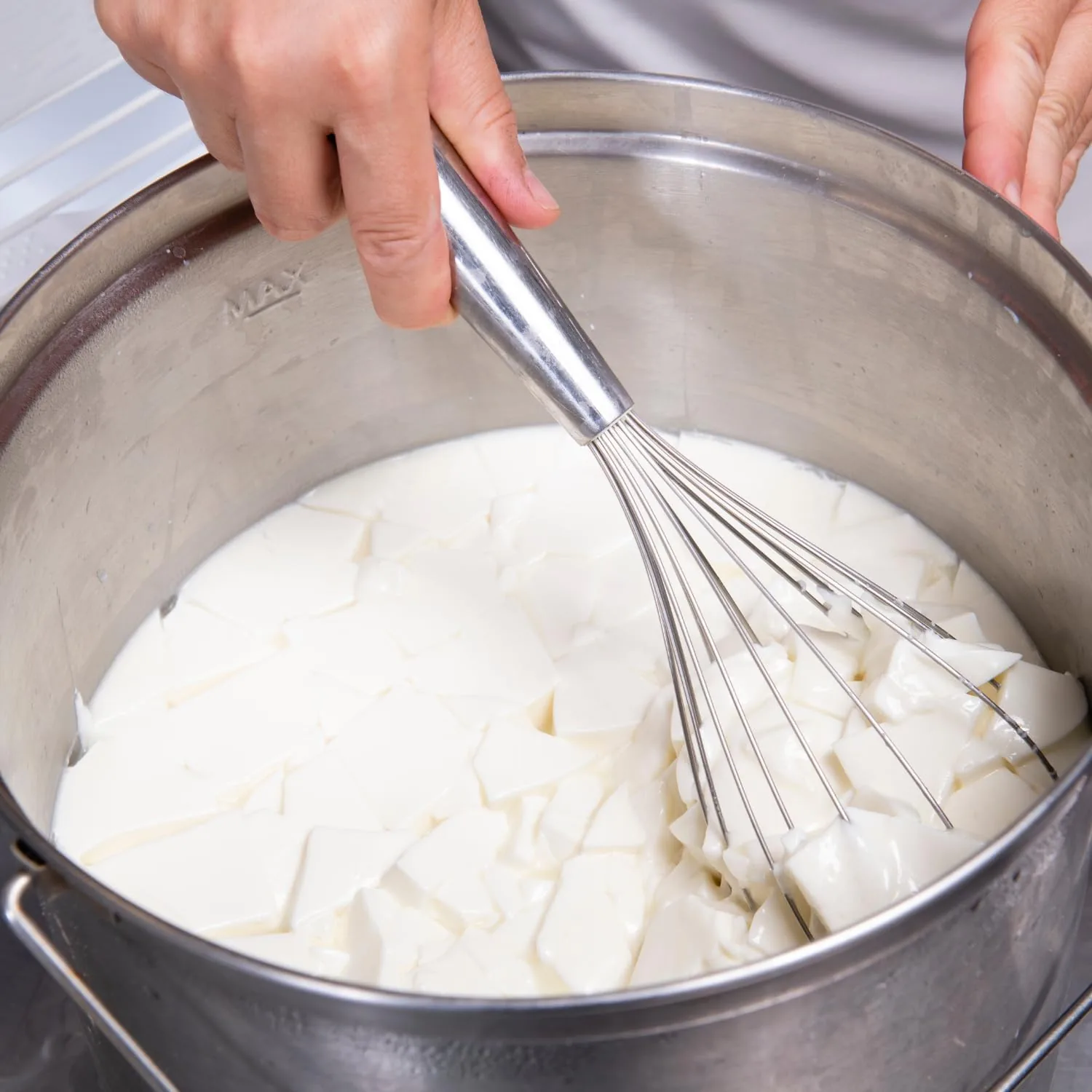
Yes. Start with a faisselle or a fresh cheese, which only need setting and draining. Warm the milk to 32 °C, add the diluted rennet, wait an hour, cut the curd and ladle it into the mould. The video above shows every step, and our recipes then take you towards soft and pressed cheeses.
| Weight | 0,12 kg |
|---|---|
| Dimensions | 18 × 13 × 3 cm |
Reviews are reserved for our customers. A few days after your order you receive a personal link by email, one click is all it takes to leave yours.
Démarrez votre propre production de kéfir d'eau maison avec nos grains vivants, cultivés artisanalement en France. Une seule dose suffit pour démarrer et produire rapidement jusqu'à 1 litre par jour, puis davantage au fil des semaines
★ 4,8/5 sur Trustpilot | Plus de 10 000 clients satisfaits
Préparez votre propre kéfir de lait maison avec nos grains vivants, cultivés artisanalement en France. Une texture onctueuse et crémeuse, plus riche en probiotiques qu'un yaourt, prête en seulement 24 heures.
★ 4,8/5 sur Trustpilot | Plus de 10 000 clients satisfaits
Lancez votre production de kombucha maison avec notre SCOBY authentique, cultivé artisanalement en France. Obtenez une boisson pétillante et détox en 7 à 14 jours, à renouveler à l'infini.
★ 4,8/5 sur Trustpilot | Plus de 10 000 clients satisfaits
Préparez votre propre ginger beer maison avec nos grains de kéfir de gingembre vivants, cultivés artisanalement en France. Une boisson pétillante, épicée et naturellement probiotique, prête en 48 heures.
★ 4,8/5 sur Trustpilot | Plus de 10 000 clients satisfaits
Le duo pétillant idéal : recevez vos grains de kéfir d'eau vivants et votre SCOBY de kombucha pour préparer 2 boissons pétillantes maison complémentaires. Économisez par rapport à l'achat séparé.
★ 4,8/5 sur Trustpilot | Plus de 10 000 clients satisfaits
Le pack découverte idéal : recevez vos grains de kéfir de lait et de kéfir d'eau vivants pour explorer 2 boissons probiotiques maison complémentaires. Économisez par rapport à l'achat séparé.
★ 4,8/5 sur Trustpilot | Plus de 10 000 clients satisfaits
Le pack complet fermentation : recevez kéfir de lait, kéfir d'eau et kombucha SCOBY pour produire 3 boissons probiotiques maison différentes. La meilleure offre pour tout découvrir.
★ 4,8/5 sur Trustpilot | Plus de 10 000 clients satisfaits
Réalisez vos fromages maison avec notre présure de veau artisanale ultra-concentrée. Un seul flacon de 50 ml suffit pour produire jusqu'à 500 litres de fromage : faisselles, tommes, camemberts et bien plus.
★ 4,8/5 sur Trustpilot | Plus de 10 000 clients satisfaits
Professionelles flüssiges Kälberlab mit hoher Konzentration (1:10.000). Nur 2 Tropfen für 10 Liter Milch, bis zu 500 Liter Käse pro Flasche.
★ 4,8/5 auf Trustpilot | Mehr als 10.000 zufriedene Kunden
Das komplette Fermentations-Starterpaket: Wasserkefir + Milchkefir + Kombucha SCOBY zum besten Preis.
★ 4,8/5 auf Trustpilot | Mehr als 10.000 zufriedene Kunden
Zwei lebende Kulturen zum Vorteilspreis: Wasserkefir (prickelnd, vegan) + Milchkefir (cremig, probiotisch). Doppelte Vielfalt für Ihre Gesundheit.
★ 4,8/5 auf Trustpilot | Mehr als 10.000 zufriedene Kunden
Starten Sie Ihre eigene Wasserkefir-Produktion zu Hause mit unseren lebenden Kristallen. Eine einzige Dosis genügt, um täglich bis zu 1 Liter probiotisches Getränk herzustellen, für immer.
★ 4,8/5 auf Trustpilot | Mehr als 10.000 zufriedene Kunden
Authentischer Kombucha SCOBY für Ihr eigenes probiotisches Teegetränk. Bildet bei jeder Fermentation einen neuen Baby-SCOBY, unbegrenzt wiederverwendbar.
★ 4,8/5 auf Trustpilot | Mehr als 10.000 zufriedene Kunden
Die Ginger Beer Plant (GBP): eine seltene lebende Kultur für echtes, natürlich prickelndes Ingwerbier aus eigener Herstellung, immer wieder.
★ 4,8/5 auf Trustpilot | Über 10.000 zufriedene Kunden
Das prickelnde Duo: lebende Wasserkefir-Kristalle und ein Kombucha-SCOBY mit Ansatzflüssigkeit für 2 prickelnde Getränke zum Selbermachen. Sparen Sie gegenüber dem Einzelkauf.
★ 4,8/5 auf Trustpilot | Über 10.000 zufriedene Kunden
Echte Milchkefirkörner für cremiges Kefir zu Hause. Über 50 lebende Bakterien- und Hefestämme, 7x reicher als Joghurt. Fertig in nur 24 Stunden.
★ 4,8/5 auf Trustpilot | Mehr als 10.000 zufriedene Kunden
Faites vos fromages maison avec une présure de veau en poudre très concentrée. Une dose rase de la cuillère fournie, soit 1 g, fait cailler 5 à 10 litres de lait. Le sachet de 100 g couvre jusqu'à 500 litres.
★ 4,8/5 sur Trustpilot
Make your own homemade cheese with a highly concentrated calf rennet powder. One level scoop of the spoon supplied, about 1 g, sets 5 to 10 litres of milk. The 100 g bag covers up to 500 litres.
★ 4.8/5 on Trustpilot
Machen Sie Ihren Käse selbst, mit einem sehr ergiebigen Kälberlab-Pulver. Ein gestrichener Messlöffel, etwa 1 g, dickt 5 bis 10 Liter Milch ein. Der Beutel mit 100 g reicht für bis zu 500 Liter.
★ 4,8/5 auf Trustpilot
Fate i vostri formaggi in casa con un caglio di vitello in polvere molto concentrato. Una dose rasa del cucchiaino in dotazione, circa 1 g, caglia da 5 a 10 litri di latte. La bustina da 100 g copre fino a 500 litri.
★ 4,8/5 su Trustpilot
Haga sus quesos caseros con un cuajo de ternero en polvo muy concentrado. Una dosis rasa de la cuchara incluida, unos 1 g, cuaja de 5 a 10 litros de leche. La bolsa de 100 g cubre hasta 500 litros.
★ 4,8/5 en Trustpilot
Reviews
There are no reviews yet.