
When you adopt milk kefir at home, there comes a time when the question naturally arises. « What about the children? Can I give them some? » Some parents love the idea of a ‘homemade’ fermented food, more natural than some industrial drinks, and combined with a simpler eating routine. Others are hesitant, and that’s normal. As soon as we talk about children, we want to be sure. Safety, tolerance, quantity, age… and above all, avoid mistakes.
The most honest answer is as follows. Milk kefir can be offered to some children, but it must be done intelligently and gradually, taking into account the child’s age, tolerance to milk, dietary context and the way in which the kefir is prepared. Kefir is not a ‘miracle product’, nor a medicine, but a living fermented food. And a fermented food, for a child, needs to be managed a little more carefully than a simple glass of milk.
In this comprehensive guide, we’ll give you all the answers:
At what age can you start drinking kefir?
The potential benefits (without unrealistic promises)
Risks and precautions (hygiene, acidity, lactose, allergies)
How to introduce it gently
How much to give according to age and profile
How to make it more ‘child-friendly’ in terms of taste
And what alternatives to choose if your child does not tolerate milk well.
And if your main aim is to offer a lactose-free fermented drink (or an alternative to milk), consider kombucha too… but beware. Because it’s often more acidic and may contain caffeine depending on the tea used, kombucha isn’t always the first choice for children, and should be managed with caution. That said, for adults at home, it’s an excellent option for varying fermentations. If you want to get started on a reliable basis, Natural Probio offers a ready-to-use culture: natural authentic kombucha strain.
When we talk about children, we need to clarify this point, because many parents confuse the two concepts.
This is a difficulty in digesting lactose (the milk sugar), linked to an enzyme called lactase. For some children, tolerance varies. Kefir, because it is fermented, may be better tolerated than conventional milk in some profiles, but this is not guaranteed.
It’s not a question of lactose. It’s an immune reaction to milk proteins. In this case, milk kefir is generally not recommended, as it still contains these proteins, even if it is fermented.
So if your child has a confirmed or suspected allergy to milk, don’t « test and see » without medical advice.
Rather than « is it advisable? » the more useful question is:
« Is it right for my child now, and if so, how do I introduce it correctly? »
Because the aim is not to give kefir at any price. The goal is :
A child who eats well and safely
A simple, stable eating routine
A pleasant food that is well tolerated
Kefir can be a tool, not an obligation.
There is no single universal answer, because recommendations can vary from country to country, depending on eating habits and the child’s health context. But there is a simple logic.
Before a certain age, the diet is highly regulated, and the introduction of home-made fermented foods must be done with caution.
If you have a baby or toddler, it’s best to seek advice from a healthcare professional, especially if the child has an allergic background, severe reflux, a very unstable bowel movement, or a family history of food allergies.
For older children who already consume dairy products (yoghurt, cheese) without worry, introducing a small quantity of kefir may be an option, especially if the kefir is mild, well made and consumed in small quantities.
The key point is not so much the exact age as :
Milk tolerance
Digestive stability
The ability to observe reactions
And the quality of preparation
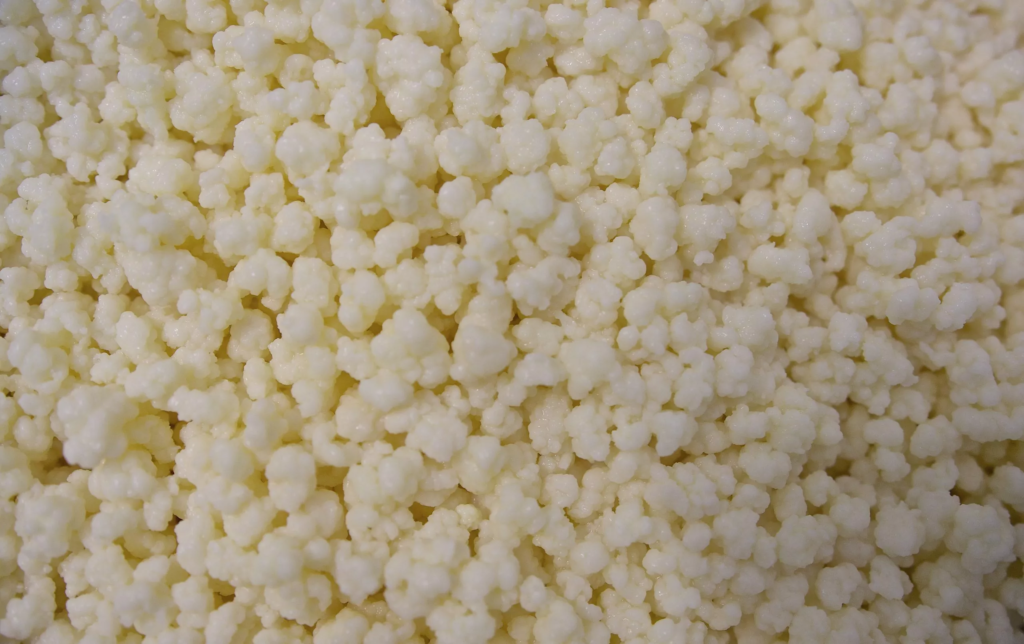
There are generally three reasons for this.
Fermented foods add an interesting diversity, and this can help to create a more varied and ‘living’ diet. Many parents are looking for a way out of an overly sweet and processed diet.
Some children drink juice or sugary drinks regularly. Kefir (well-prepared, sweet) can be a more interesting alternative, especially if the child likes slightly acidic tastes.
Some parents find that fermented products go down better than milk with their child. This can happen, but it’s not automatic. That’s why gradual introduction is essential.
If you’re making home-made kefir, you need to follow some simple and serious hygiene rules, especially when it comes to children.
Kefir does not need a medical protocol, but it does need to be clean:
Washed and rinsed jar
Clean utensils
Clean cloth or colander
Clean hands
Kefir that has a strange smell, a suspect colour or an « abnormal » texture should not be given to a child.
For children, very acidic kefir is often less pleasant and sometimes less well tolerated. A mild, slightly fermented kefir is generally more suitable.
After filtering, chill in the fridge. This stabilises the taste and reduces the risk of excessive fermentation.
Many parents ask themselves this question, especially if their child sometimes complains of bloating or pain after drinking milk.
Fermentation transforms some of the lactose, which may make kefir more tolerable than milk for some people. But some lactose may remain. So if you suspect a sensitivity, start with a very small quantity and observe.
And if your child is very sensitive, one possible option is to prepare kefir with lactose-free milk, or to turn to other non-dairy fermentations (but with caution for the child).
The logic here is simple. Start very small. Even if you, as an adult, drink a large glass, a child does not need the same dose.
Start with one or two teaspoons or a tablespoon, during a meal. Observe. If all goes well, you can gradually increase the dose.
The aim is to avoid a digestive reaction simply because the quantity was too large.
If you decide to give it, it’s better to give a small amount regularly (if the child tolerates it) than an occasional large glass.
But once again: you don’t have to give it every day. Some children can drink it from time to time, and that’s fine.

There is a very practical dimension. Taste. Kefir that is too acidic, too « adult », will be rejected.
Ferment for slightly less time
Use whole milk (often milder)
Serve chilled
You can mix a small amount of kefir with :
A little crushed fruit
A touch of honey for children who can eat honey (depending on age and recommendations)
A mashed banana
A little compote
The idea is to make the first experience pleasant. If the first sip is « too sour », the child will say no forever.
Kefir cheese can be easier to accept. It has a spreadable, softer texture. You can serve it on bread or with vegetables.
This is often a sign that the dose is too high, or that the child is not used to fermentations. Reduce the amount and start again more slowly.
Some children are sensitive to acidic foods. In this case :
Shorter fermentation
Consume with meal
Serve chilled
Or stop if the child does not like it
If the child shows signs of intolerance or a stronger reaction, stop and seek medical advice. Never force yourself.
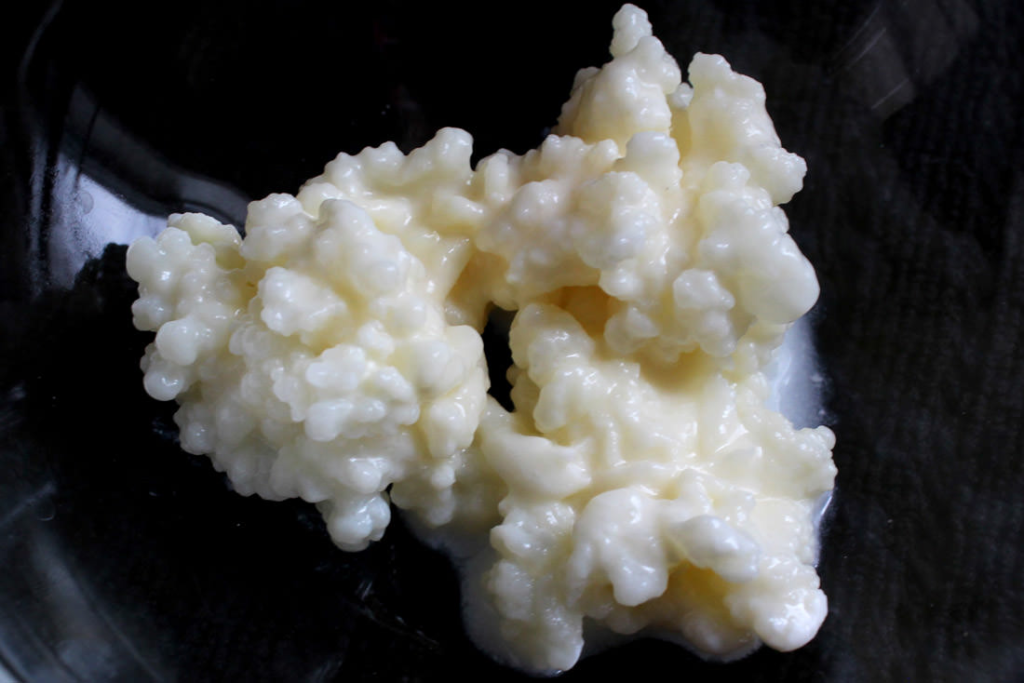
No. And it’s important to say so.
A child can grow up just fine without kefir. Kefir is a possible « plus », not a nutritional obligation.
The most important thing for a child’s digestive health is :
A varied diet
Fibre (fruit, vegetables, pulses)
Proper hydration
A good night’s sleep
And a stable eating environment
If kefir helps to improve variety and replace overly sweet drinks, then it makes sense. Otherwise, there’s no point in fighting it.
Some parents ask: « What about kombucha for children? »
Kombucha is a fermented tea-based drink. Depending on how it is prepared, it may contain :
A more pronounced acidity
Sometimes a slight caffeine content (depending on the tea used)
Fermentation requires rigour
So, for children, kombucha isn’t always the best place to start. On the other hand, for the adults in the house, it’s a superb drink, especially if you like fizzy, tangy flavours. To get you off to an easy and steady start, Natural Probio offers a strain of authentic natural kombucha.
To sum up: (mild) milk kefir is often more ‘family-friendly’ than kombucha, but it all depends on taste and context.
You can test a micro-dose of mild kefir during a meal and observe. If all goes well and the child likes it, you can slowly increase the dose.
A very gradual test, or kefir made with lactose-free milk. Otherwise, it’s better not to insist and to choose other approaches.
Start with kefir cheese or kefir mixed with compote just before serving.
Exercise maximum caution and seek medical advice if necessary. We’re not taking any risks.
A mild kefir is more acceptable.
The cold rounds out the acidity.
A child does not need a large glass. A small, well-tolerated portion is better.
A little « special » glass, a straw, a moment of « ritual » can help. Children love the « homemade drink » aspect.
If the child refuses, don’t insist. Try again later or give up.
This depends on the context and the tolerance of the milk. For toddlers, caution is advised and medical advice sought if necessary. For older children who already tolerate dairy products, a small quantity can be tested gradually.
Start with a micro-dose (a teaspoon or tablespoon), during a meal, then increase slowly if all goes well. Keep the dose small, especially at first.
Fermentation transforms some of the lactose, so it may be better tolerated, but some may remain. If your child is very sensitive, it’s best to avoid lactose or use lactose-free milk.
Pain, diarrhoea, skin reaction, severe discomfort, total refusal, suspect smell/taste. If in doubt, stop and seek professional advice.
Kombucha is lactose-free but often more acidic and may contain caffeine, depending on the tea. It’s not always the first choice for children. For adults, it’s an excellent fermented drink, and you can start easily with the Natural Probio strain of kombucha.

Milk kefir can be offered to some children, especially if they already tolerate dairy products well, but the introduction must be gradual and cautious. A mild, well-prepared kefir, served in small quantities with a meal, is generally the best approach. The aim is not to force the issue, but to add an interesting option to an already balanced diet.
And if your family likes fermentations, you can also vary your drinks for adults with drinks like kombucha. To get started on a reliable basis, discover the Natural Probio strain of authentic kombucha.
Sources :
📖 Go further: read our How to Make Kefir at Home: The Complete Guide, with a batch calculator, timings and troubleshooting.
Ready to try it yourself?
Discover our live milk kefir grains, shipped in 24/48h with a step-by-step English guide. And for the curious, the history of kefir is a fascinating read.